Describe the vibration in the cabin
A steering wheel that trembles at a standstill is not the same complaint as a vibration that begins at road speed. Note where you feel it: the seat, steering wheel, pedals or the whole body of the car. Describe whether it is steady, pulsing or accompanied by an uneven engine sound. Those distinctions are more useful than assigning a cause from the word 'vibration'.
Compare with the car's normal behaviour at the same temperature. Some vehicles transmit more vibration during warm-up or particular operating modes, but a new pronounced change deserves attention. If there is severe shaking, a flashing warning or stalling, stop safely and seek help. The fact that the car is stationary does not make every vibration a harmless comfort issue.
Notice ordinary changes without staging a test
If you have already noticed that normal climate-control use changes the sensation, tell the workshop. On an automatic, note the selector position during the ordinary event, but do not cycle through positions repeatedly or hold the vehicle against drive to amplify the vibration. Let a professional choose controlled comparisons appropriate to the transmission and engine.
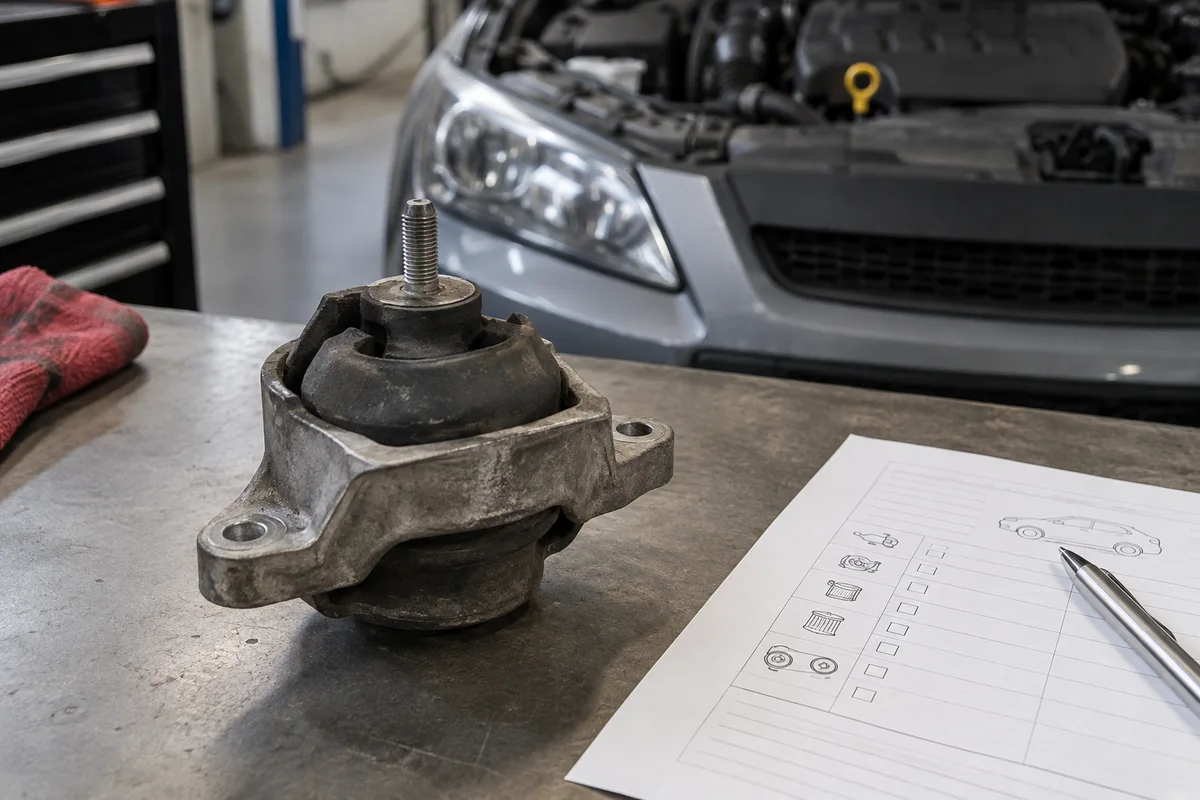
An engine can run unevenly, or a vibration can be transmitted differently through mountings and surrounding components. A loose interior item can also exaggerate what the occupants hear. Remove ordinary loose belongings when safely parked, but do not wedge material around engine parts or attempt to lift or restrain the engine. The source needs proper inspection, not a makeshift damping experiment.
Keep engine behaviour and transmitted movement separate
Give the workshop the location of the sensation, its timing and whether the engine sounds irregular. Include recent work that involved the engine, exhaust or surrounding structure. Ask what checks distinguish a running-quality issue from the way vibration reaches the cabin. A mounting should not be condemned solely because the seat shakes, and a scan without codes does not rule out every mechanical concern.
After the repair, compare the same normal cold or warm condition and the places where the vibration was originally felt. Ask what was confirmed and keep that record. If only an interior rattle disappears while the underlying shake remains, explain the difference. A precise follow-up helps avoid treating two related sensations as though they were a single problem with a single obvious cause.