Why the morning matters
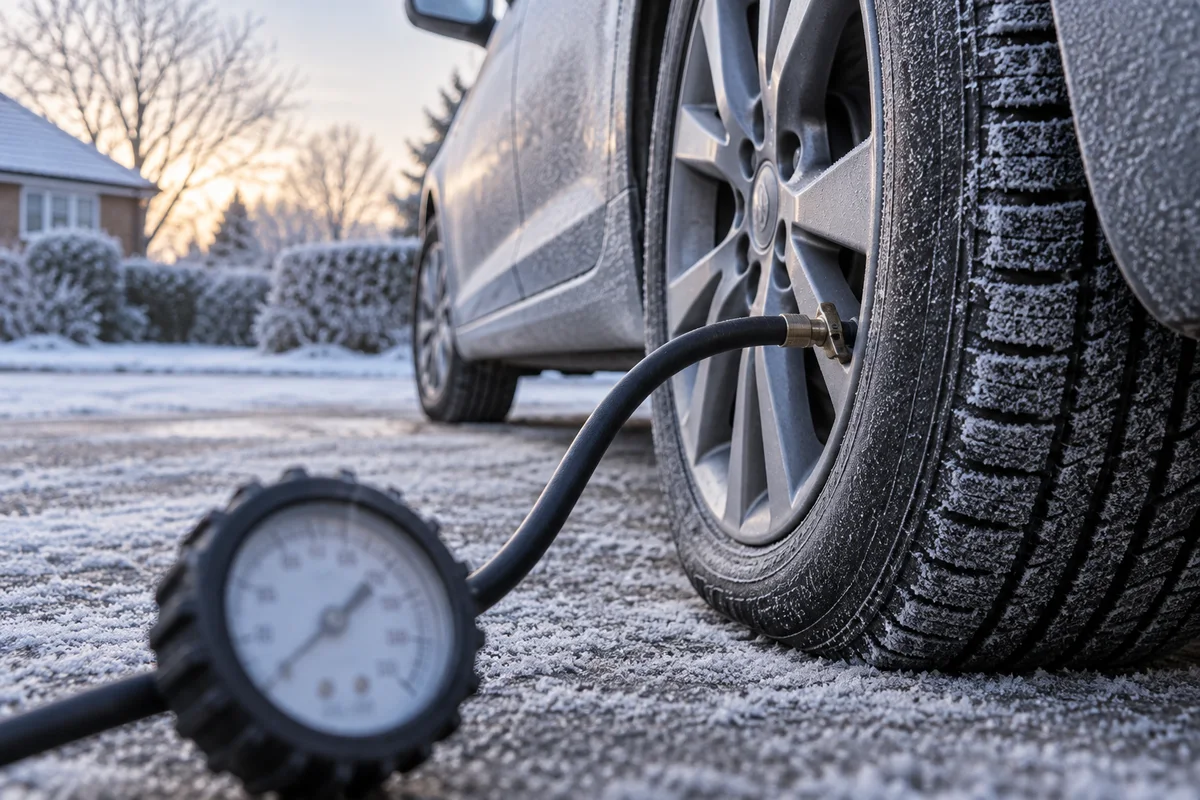
A pressure warning that appears after a cold night can disappear as the tyres warm during driving. That change does not prove that the cold pressure was correct. Air pressure varies with temperature, so the useful reference is the vehicle’s recommended cold setting rather than the moment the lamp happens to switch off.
If the car pulls, a tyre looks deflated or you hear an unusual flapping sound, stop safely and seek help. Do not drive to warm the tyres as a way of extinguishing the warning. A puncture and a temperature-related reduction can coexist.
Read the car’s label
Find the pressure label or handbook and select the setting appropriate to the tyre size and load. Front and rear values may differ. The maximum pressure moulded on a tyre sidewall is not the vehicle’s everyday inflation recommendation.
Measure all road tyres using a reliable gauge under the handbook’s cold-check conditions. Write down the readings before adjusting them. One tyre markedly lower than the others deserves particular attention, but similar reductions across the set do not remove the need to restore the correct settings.
Reset only after the physical check
Some monitoring systems require a reset or calibration after pressures are corrected; others update differently. Use the exact procedure for the car. Resetting before checking can teach an indirect system an unsuitable reference and hide the original useful comparison.
A system that reports individual pressures may take time or movement to refresh. Do not keep adding air because a stationary display has not yet changed. Compare the gauge reading with the specified value and follow the update instructions rather than chasing the screen.
Watch the next cold reading
Recheck under comparable cold conditions. A repeated loss in one tyre suggests that a tyre professional should inspect the tyre, valve and wheel. Record which position lost pressure and how quickly. That simple history is more informative than the statement that the dashboard light comes on sometimes.
If you have carried a heavy load, check whether the label specifies a different setting and adjust under the correct conditions. Do not leave loading assumptions unstated when asking someone else to inflate the tyres.