The flash can be the system working
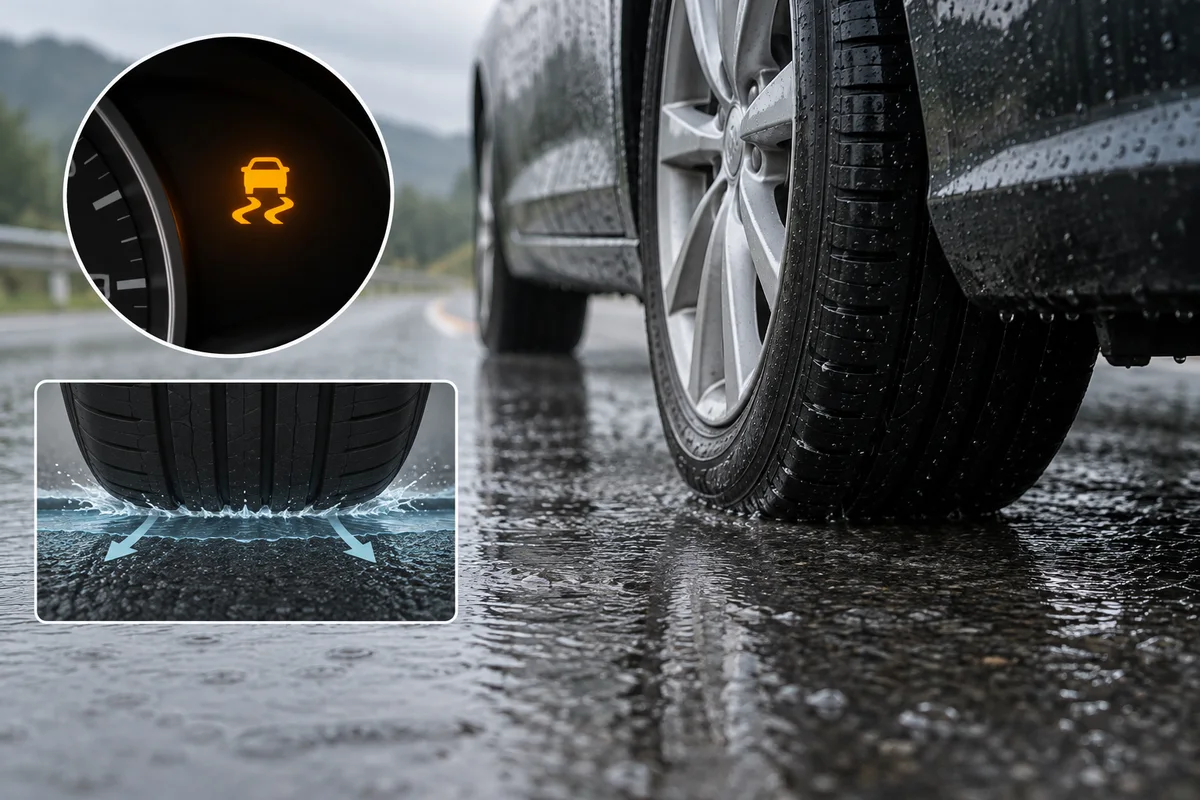
The skidding-car symbol often flashes when traction or stability control intervenes. On a wet junction, loose surface or snowy incline, the system may reduce power or apply individual brakes to help manage wheel slip. The exact operation depends on the car.
A momentary flash during a slippery event is different from a lamp that remains on with a fault message. Read the handbook so you know which display you are seeing. Do not switch the system off simply because you dislike the interruption in acceleration.
Give the tyres less to do
Ease the accelerator smoothly and adapt speed to the surface. Sudden steering, braking and acceleration can demand more grip than the tyres have available. Electronic assistance cannot create unlimited adhesion, so the flash should not encourage a faster attempt at the same manoeuvre.
Consider the road itself: standing water, painted markings, leaves, grit and frost can produce local changes in grip. A familiar route can behave differently after rain. Leave more room for the next action rather than focusing on getting the indicator to stop.
Repeated intervention deserves context
If the light flashes frequently in ordinary dry driving, arrange an inspection. Record the speed range, whether the car was turning or accelerating, and any recent tyre or wheel work. Incorrect pressures, unsuitable tyre combinations or a system fault are different possibilities that require assessment, not a single conclusion from the symbol.
Check visible tyre condition and cold pressures safely. Do not deliberately provoke sliding to compare how the car responds. If steering or braking feels abnormal, stop and seek advice before further travel rather than treating it as routine electronic intervention.
Use special modes deliberately
Some vehicles provide modes for specific surfaces or situations. Use them only as described in the handbook and restore normal settings when appropriate. An off-road or reduced-assistance setting is not a universal cure for flashing on a public road. The aim is controlled progress with adequate grip, not an indicator-free dashboard.
Passengers may notice a short reduction in acceleration at the same moment. Record that detail if intervention seems unexplained; it can help distinguish a commanded power reduction from a separate engine hesitation.