Choose safety before sound quality
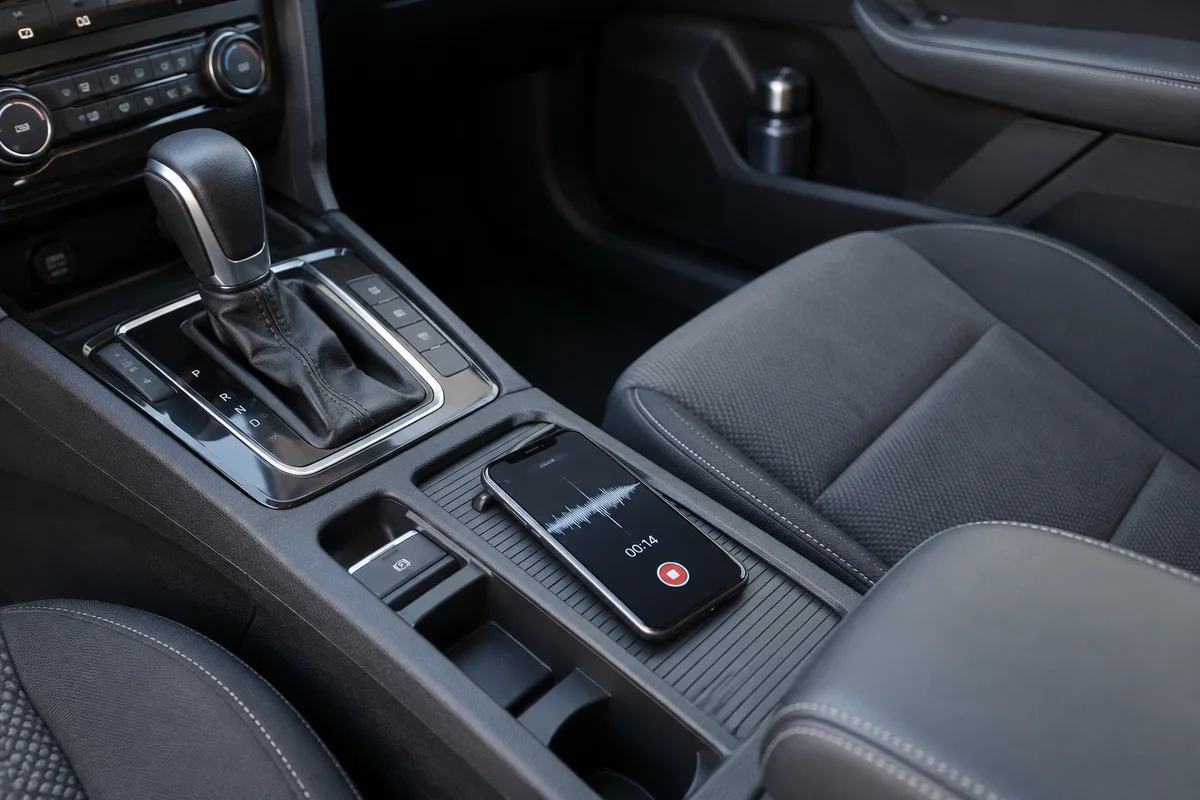
A recording can communicate the rhythm of a rattle or the character of a squeak better than an imitation at a reception desk. It cannot reliably locate the source or prove a failed part. Phones alter sound, nearby surfaces reflect it and the loudest noise in the recording may not be the one that concerned you.
Never hold or adjust a phone while driving. If the sound occurs only on the road, describe the circumstances to the workshop and let it arrange a suitable assessment. Do not ask a passenger to lean outside, place a device near a wheel or repeat an unsafe manoeuvre for a clearer clip. An imperfect description is preferable to an incident.
A parked recording still needs care
When a sound can be heard safely from outside a stationary vehicle, keep a sensible distance from hot and moving components. Do not reach into the engine bay with a phone or place it where it could fall onto a belt or fan. Electric cooling fans may operate unexpectedly. Avoid enclosed spaces where exhaust gases can accumulate.
Record a short clip and then describe where you were standing, whether the engine was cold or warm and what controls were in use. Do not rev the engine aggressively to amplify the sound. A spoken note made afterwards can preserve context without drowning out the noise itself. Keep the original file rather than applying filters that change its character.
Send a useful explanation with the file
Tell the workshop which moment in the clip contains the sound and why it differs from normal. If the recording also includes traffic, wind or another vehicle, identify that distraction. A thirty-second file with a clear description is usually easier to assess than several minutes sent without explanation. Do not assume the recipient can hear exactly what you heard beside the car.
Keep the recording private when it contains conversations, faces or registration details that are not relevant. Most importantly, do not use a recording as reassurance that a new severe knock or loss of control can wait. The workshop may still need to examine the car in person. Sound is supporting evidence, not a remote verdict on whether continued driving is safe.