Begin with where you hear it
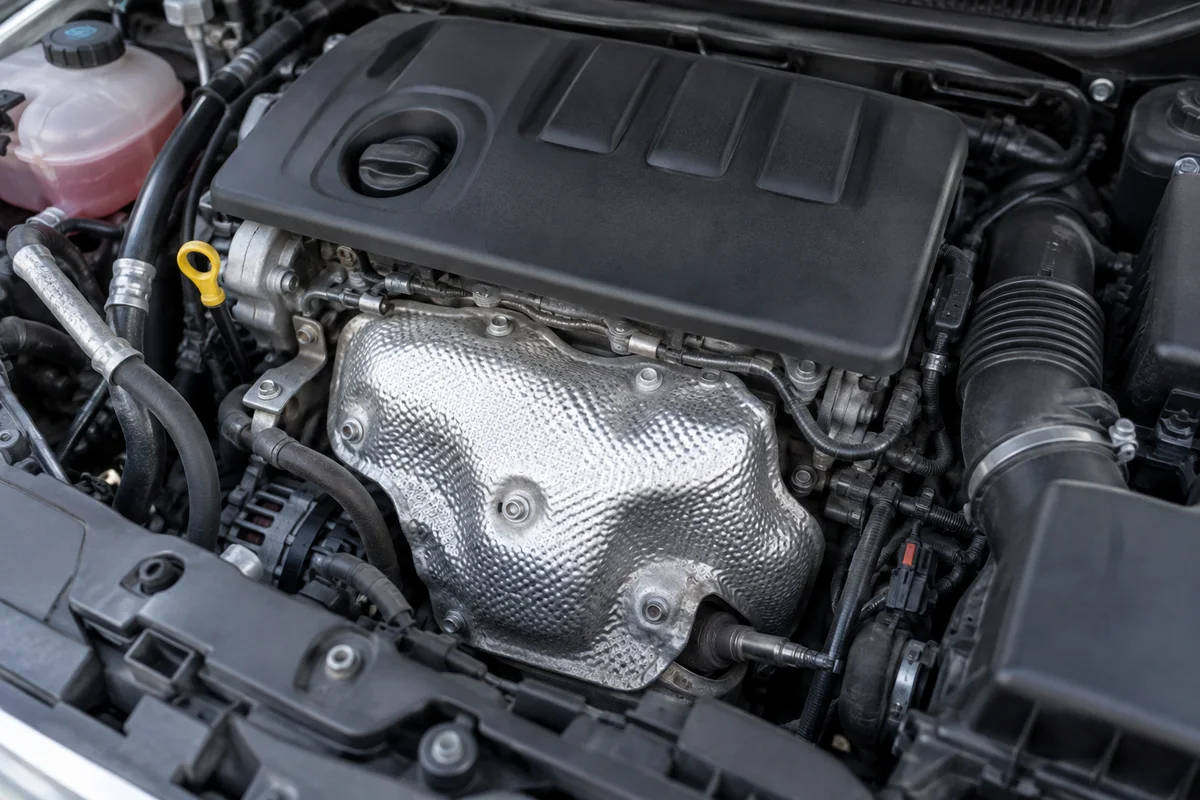
A rattle heard at a standstill may seem to come from the engine even when another part is transmitting the sound. Interior trim, exhaust shielding and mechanical components can create very different problems that sound similar through the body of a car. Do not decide the source solely from the seat where the noise is easiest to hear.
Note whether it is louder inside or outside, whether the car is cold or warm and whether it appeared suddenly. A light intermittent buzz and a heavy new knock should not be described as though they are the same complaint. If there is severe noise, a serious warning or rough running, stop safely and seek help instead of continuing to listen.
Keep observation separate from a running-engine experiment
Do not reach into the engine bay to hold a component still, press on a shield or move a hose while the engine runs. Hot surfaces and moving parts make that an unsafe way to locate a noise. Cooling fans can also start unexpectedly. A phone recording from a safe position may help describe the sound, but it cannot certify the source.
If the noise changed during ordinary use when engine speed changed, report that fact. Do not repeatedly raise the revs to explore its limits. Note whether normal accessory operation, such as switching climate control on, coincided with a change. That is useful context, not proof that the accessory itself has failed. Leave the controlled comparisons to the workshop.
Ask for identification before replacement
Bring recent work details, especially if the sound began soon afterwards. A loose external item and an internal engine problem need different responses, so ask what the inspection actually found. The workshop should distinguish a confirmed source from a noise that remains unlocated. Replacing several plausible components without that distinction can be costly and still leave the complaint untouched.
After repair, listen during the ordinary conditions in which the sound used to occur, without performing unusual tests. Ask whether the vehicle was checked cold as well as warm if that mattered. Keep a short record if the noise returns. A description with timing and character is more useful than escalating from 'rattle' to 'engine failure' because the second visit feels frustrating.