Start with the two settings
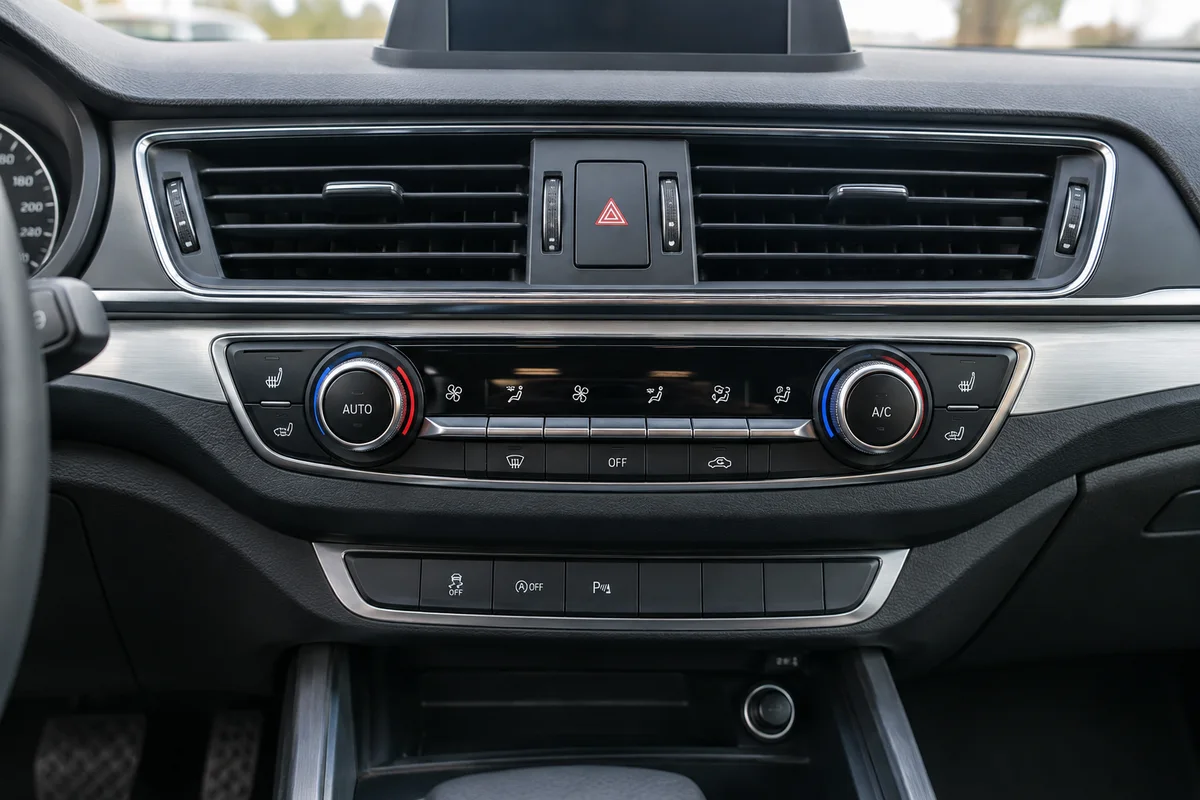
Dual-zone climate control allows the driver and passenger to request different temperatures. A warm passenger side may therefore be doing exactly what its setting asks. Check both displayed settings and the handbook's synchronisation function. Some cars change the relationship between controls when a passenger setting is adjusted, so a quick glance at only the driver's number can miss the explanation.
Compare corresponding outlets
Once the settings are aligned according to the handbook, compare similar outlets under ordinary conditions while safely parked. A footwell outlet and a face-level vent may not be intended to feel identical. Check that the vents you compare are open and that automatic distribution is not deliberately changing airflow. Note whether the difference is in temperature, airflow strength or both.
Allow for the cabin's initial condition. Sun on one side of the vehicle can make the occupants feel different levels of heat even before the system has settled. The meaningful complaint is a persistent difference under comparable settings, especially when it is new. Avoid trying to measure precision performance with a hand held briefly in front of one vent.
Describe what changes and what stays
Does the affected side respond at all when its normal temperature setting changes? Does the problem remain after an ordinary journey? Is there a clicking sound from behind the dashboard? These are useful observations to report, not instructions to dismantle the dashboard or operate hidden calibration menus. A flap-control problem is one possibility, but it cannot be confirmed from the seating position alone.
If the problem began after battery work, a repair or a change to the climate system, include that timing. Do not assume a universal reset will fix it. The correct checks depend on the particular controls, actuators and system design, and an internet button sequence for another model may simply change unrelated settings.
Make the repair request specific
Ask the workshop to assess the left-right difference using matched settings and to distinguish temperature control from overall cooling performance. A weak refrigeration system and an air-distribution issue are not the same repair. After work, check both sides and the functions you actually use, including demisting. Keep the report of what was found so a returning complaint can be compared with the original one rather than treated as a new vague request for an air-conditioning refill.