Start with the most urgent instruction
When several symbols appear together, the number of lights is less useful than their meanings. A red brake warning, oil-pressure alert, overheating message or instruction to stop takes priority over trying to explain the whole dashboard. Stop safely and follow the appropriate vehicle instructions before collecting further information.
Do not decide that every light must be a harmless electrical glitch because they appeared simultaneously. Shared power or communication problems can affect several systems, but those systems may genuinely be unavailable. The way the car brakes, steers and runs matters alongside the display.
Make a short chronology
Once safely parked, photograph the display and write down what happened just before the first warning. Include a slow start, a stalled engine, a battery replacement, wheel work or an impact if relevant. Distinguish what you observed from what someone has suggested might be wrong.
Some lamps appear normally when the ignition is on but the engine is stopped. If the engine stalled first, note that sequence. It helps avoid treating every lamp visible afterwards as an independent new fault. Equally, an alert that appeared before the stall should not be lost in the later collection of symbols.
Let the diagnostic scope match the complaint
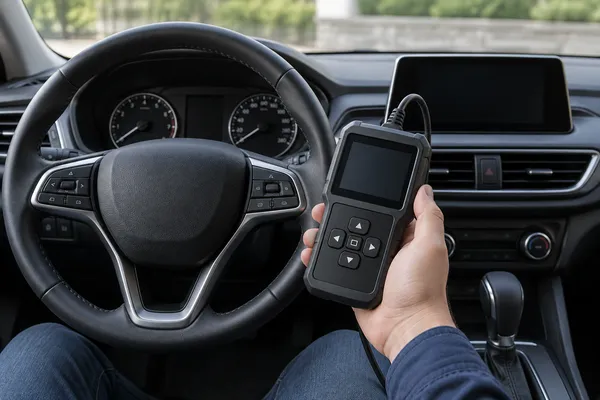
A scan limited to the engine may miss brake, body or steering information. Ask for assessment of the systems involved, including the electrical supply when appropriate. Several codes can be consequences of a single event, so an itemised list of codes is not automatically an itemised list of parts to replace.
Preserve the original data before clearing it. A technician can compare timing, status and relevant tests to decide which findings are primary. Ask for an explanation of that distinction rather than a promise that resetting everything will solve the problem.
When receiving a diagnostic report, ask which findings were current and which were historical. That distinction does not automatically make old entries irrelevant, but it prevents every stored event from being treated as a separate present failure. A good explanation links the tested cause to the symptoms you actually observed.
After a restart
If warnings disappear, keep the record and arrange follow-up for unexplained or recurring faults. A successful restart demonstrates a change in state, not necessarily a repair. If any safety-critical symptom remains, stop and ask for assistance regardless of how tidy the dashboard now looks.