Read before reaching for a bottle
An oil-can symbol is easy to recognise, but the message around it matters. A low-level reminder and a low-pressure warning are not interchangeable. If pressure is reported while the engine is running, stop safely and switch off rather than treating it as an ordinary invitation to top up.
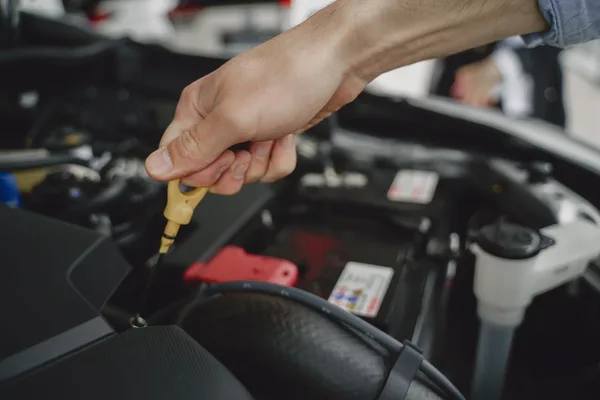
For a level message, follow the handbook’s checking conditions. Some cars use a dipstick; others use an electronic procedure that requires particular conditions. A reading obtained immediately after parking on a slope may not be comparable with a correctly performed check.
Work with the specified range
Identify the minimum and maximum marks or the electronic instructions before adding oil. The aim is the correct range, not the highest possible reading. Use the approved specification for the engine and add only as directed, allowing the specified time before checking again.
Do not infer the required quantity from the height of a dashboard graphic. Likewise, the space between marks is not universally the same volume across engines. The handbook or a competent workshop can clarify the amount. Avoid spilling oil onto hot or electrical components, and close the filler cap and refit the dipstick properly afterwards.
A log distinguishes one event from a pattern
Record the mileage, date, product and quantity added. A single low reading after a long interval and a repeated decline over a short distance deserve different conversations. The log allows the workshop to compare consumption or leakage with the manufacturer’s guidance without relying on memory.
Look for visible fresh marks beneath the parked car, but do not assume the absence of a puddle means no problem exists. Mention smoke, an unusual smell or recent service work as separate observations. If the level rises unexpectedly instead of falling, report that too rather than draining or topping up without understanding why.
A service invoice can clarify which oil was used and how much was filled. If the warning began soon after that visit, contact the workshop with the measured level rather than automatically adding a full bottle. Both an underfill and an inaccurate reading should be considered before changing the quantity again.
Know when observation is no longer enough
A persistent warning despite a correct measured level needs assessment. So does a rapid or recurring loss. An apparently faulty sensor remains a possibility, not permission to ignore an unverified lubrication complaint. Preserve the exact warning text so the technician knows whether the car reported level, pressure or service life.