Begin with the whole display
A low-coolant message tells you to investigate the amount of fluid in the cooling system. It does not mean that the temperature is necessarily high, and it does not guarantee that the engine is safe to keep running. Read any accompanying temperature warning or instruction to stop before deciding what to do.
If the vehicle is overheating, steaming or losing fluid visibly, stop safely and arrange help. Do not postpone that response until you have obtained a perfect level reading. The message, physical signs and engine behaviour need to be considered together.
Cold inspection gives a useful reference
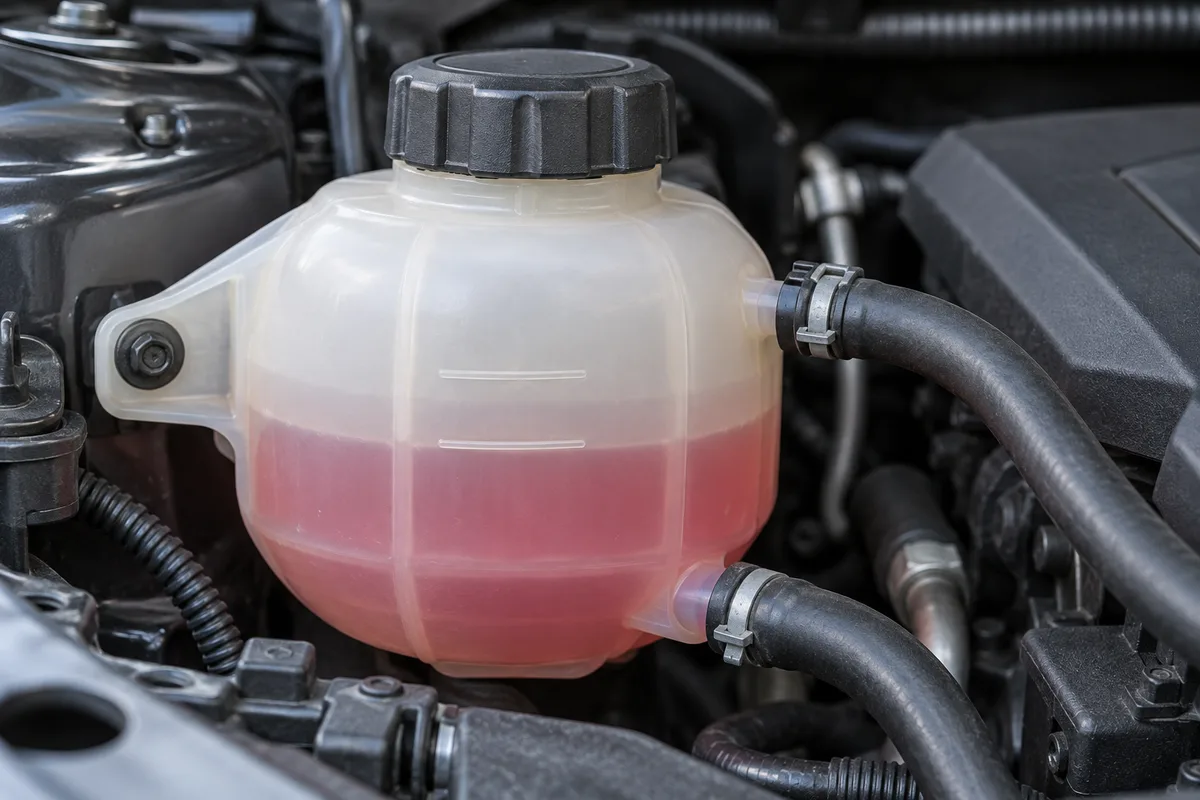
Once the engine is cold, identify the correct reservoir from the handbook. Some vehicles have more than one cooling circuit. Observe the marked range without removing a cap unnecessarily, and make sure the car is parked as specified for the check. Hot and cold readings should not be compared as if conditions were identical.
A photograph of the level and date can make a later comparison more useful. Look around the visible reservoir and beneath the parked vehicle for signs of leakage, without dismantling parts or crawling underneath. A clean parking space helps distinguish a fresh drip from an old stain.
Choose the fluid by specification
Coolant colour alone is not a reliable purchasing guide. Use the product specification and dilution instructions required for the vehicle. Mixing whatever bottles are available can create a new problem without solving the reason the level fell. If the correct fluid or safe procedure is uncertain, ask the workshop rather than improvising.
Do not overfill in anticipation of another loss. Record any quantity added and tell the technician. A level that repeatedly falls calls for investigation even when no puddle is visible; fluid loss is not always easy to see from outside.
Keep the sensor possibility in proportion
If the cold level appears correct but the message persists, a sensing or electrical problem is possible. That is a reason for diagnosis, not proof that the alert can be ignored. Give the workshop the exact message, cold reading and any recent cooling-system work so the complaint can be checked accurately.