Record the event before interpreting it
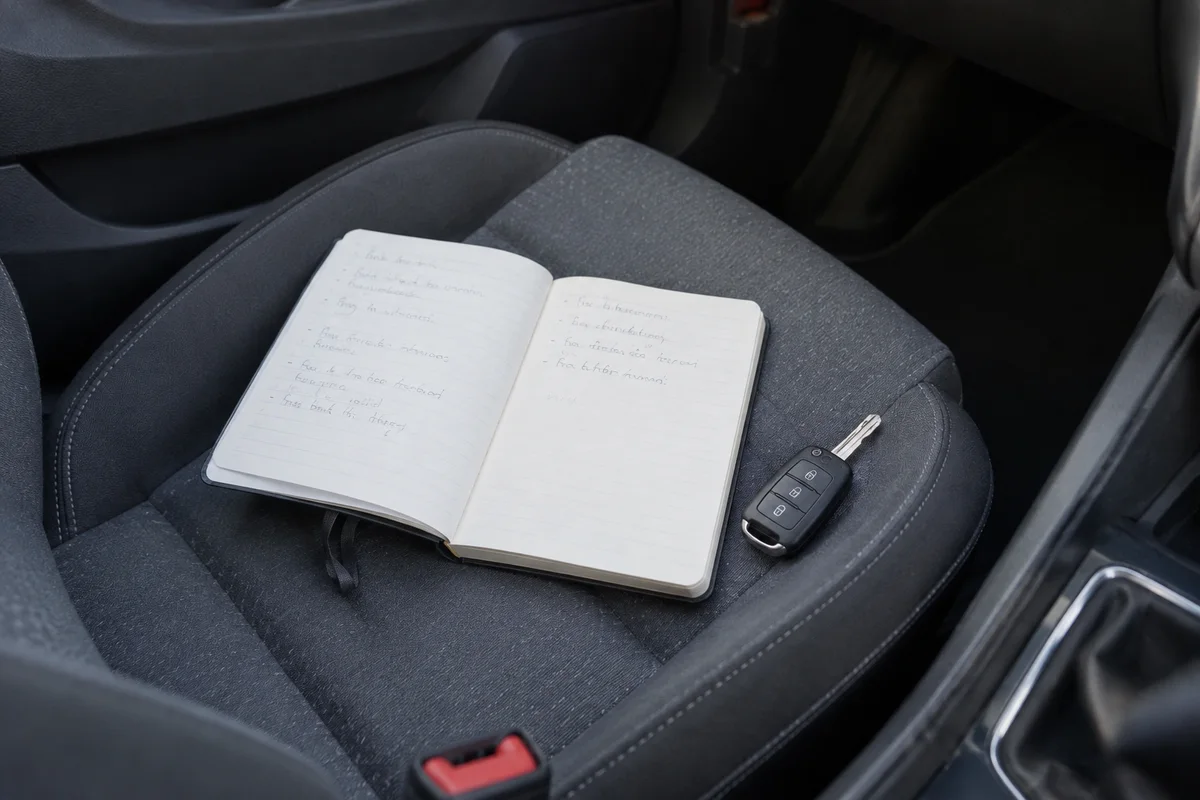
An intermittent fault has an inconvenient habit of disappearing just before an appointment. A simple diary helps preserve what the workshop cannot immediately reproduce. It need not be technical. Start with the date, approximate journey stage and a plain description of what changed. 'The engine stumbled once while waiting at a junction' is clearer than a confident but untested diagnosis.
Add whether the car was cold or had been driven for some time, whether the road was wet and whether any warning appeared. Note the duration and what happened next. Did normal behaviour return by itself, or only after the vehicle was stopped? Write this down once safely parked. Memory tends to merge separate events when a problem continues for several weeks.
Keep a few fields consistent
Use the same small set of observations each time instead of creating an elaborate spreadsheet that becomes a chore. Record what you know and leave uncertain details marked as uncertain. An approximate time is better than an invented exact one. If a warning message appears, preserve its wording or take a photograph after stopping safely.
Keep recent servicing, repairs and software work on a separate timeline. A nearby date may be relevant without proving causation. Also record symptom-free journeys when they provide a meaningful comparison, such as the same route in dry weather. Do not deliberately provoke a fault by driving harder, ignoring a warning or repeating a manoeuvre that felt unsafe.
Turn the diary into a short handover
Before the appointment, select two or three clear examples and identify any pattern you genuinely observed. Give the full notes to the workshop if requested, but lead with the concise description. Mention whether leaving the car overnight could help reproduce a cold-related complaint. The practical booking arrangements may matter as much as the number of pages you bring.
If the workshop cannot reproduce the problem, ask what information would make a later visit more useful. Agree what to do if the symptom returns and which changes mean you should stop driving. The diary supports professional investigation; it does not make continued use safe. A serious warning, loss of control or strong fuel smell requires action rather than another carefully completed entry.