Know which heating system you have
A conventional combustion-engine car often uses heat from the engine's cooling circuit for the cabin. Electric vehicles and some hybrids can use other arrangements, so an engine-based explanation is not universal. Begin with the handbook and the normal behaviour of this particular vehicle. A cold cabin immediately after starting in winter is not, by itself, proof of a failed heater.
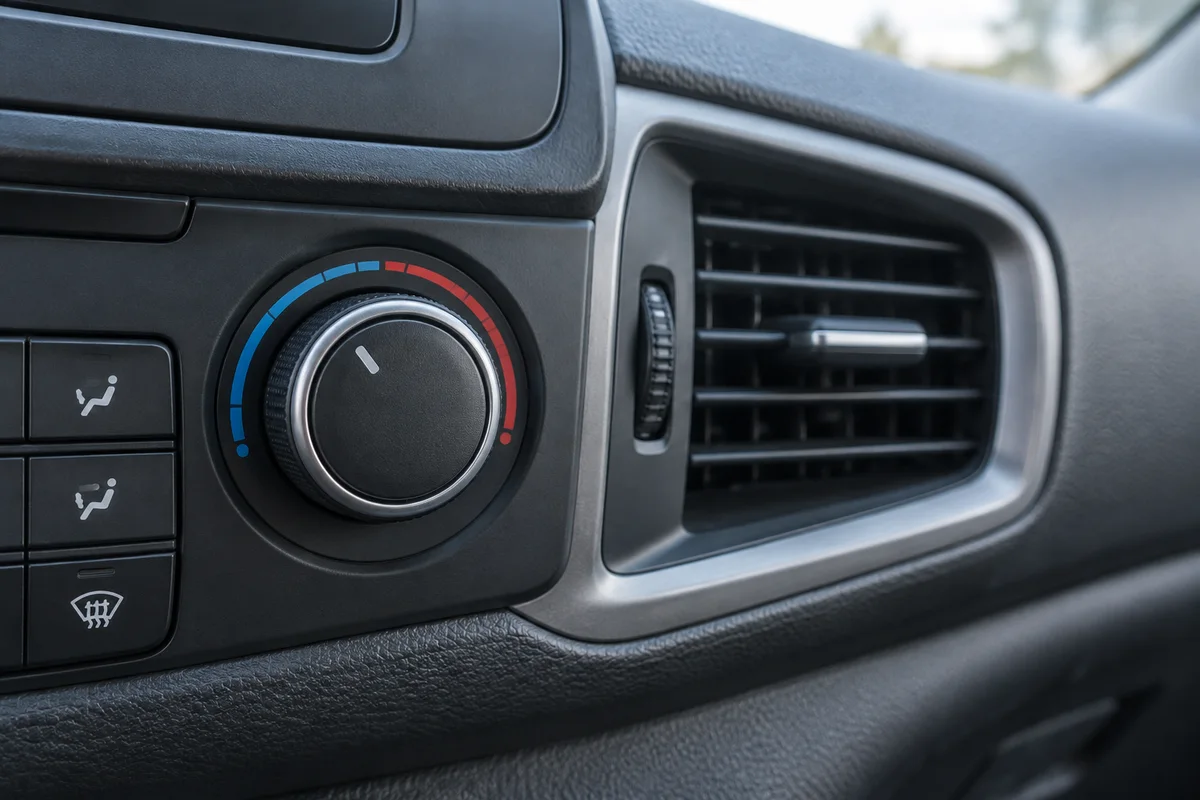
Check the ordinary temperature and distribution controls while safely parked. Make sure you are comparing the outlets that the selected mode is intended to supply. Record whether airflow is strong but cold, weak everywhere or different from one side to the other. Those are separate complaints even though each can leave the driver feeling that the heating does not work.
Keep an eye on the vehicle’s warnings
If an engine-temperature warning appears, follow the handbook and stop safely. A loss of cabin heat alongside abnormal engine temperature needs more attention than a comfort complaint alone. Do not open a hot coolant cap or reach around hoses to decide whether they feel warm. Pressurised hot coolant can cause serious injury, and touching a pipe is not a complete diagnosis.
If you already know the coolant level has changed from routine checks performed under the prescribed safe conditions, mention that to the workshop. Do not repeatedly top up and continue without understanding an unexplained loss. The correct fluid and checking method depend on the vehicle. On an electric or hybrid car, leave high-voltage heating equipment and orange cables untouched.
Give the workshop a useful comparison
Describe how long the car had been in ordinary use, the outside conditions and whether the temperature display behaved normally. Mention recent cooling-system or dashboard work and any unusual smell or dampness inside. The heater's control, heat supply and airflow can require different checks. A cold outlet does not identify which of those has failed.
Ask what the inspection found and whether demisting performance has also been checked. After repair, assess the normal warm-up and outlet response rather than expecting instant heat under every condition. If the windscreen cannot be kept clear, do not drive until visibility can be maintained. The heating problem then affects the ability to see, regardless of how tolerable the cabin temperature feels.