Notice the sequence, not just the final light
On many vehicles, the tyre-pressure lamp flashes for a period and then remains illuminated when the monitoring system detects a malfunction. Consult the handbook for the exact pattern. A steady light seen halfway through a journey might have started with flashing that you missed at startup.
Record any message and whether numerical readings are missing from one wheel or all wheels. That distinction helps the technician, but it does not identify a failed sensor by itself. Some cars estimate pressure indirectly and do not have a pressure sensor inside each tyre.
Check what the system cannot currently guarantee
With the car safely parked, inspect the tyres and measure their pressures under the specified conditions. Use the vehicle label, including the appropriate load setting. A monitoring fault means that you should not rely on the electronic system to warn you of every subsequent pressure loss.
If a tyre is visibly flat, damaged or losing air rapidly, arrange tyre assistance rather than continuing because the problem was described as electronic. Restoring the monitoring system and dealing with the tyre itself are separate tasks.
Recent wheel work is useful context
Tell the workshop about seasonal wheel changes, a puncture repair, new tyres or a temporary spare. Compatibility, identification and relearning requirements depend on the system. A wheel that fits physically does not automatically contain the correct compatible monitoring equipment.
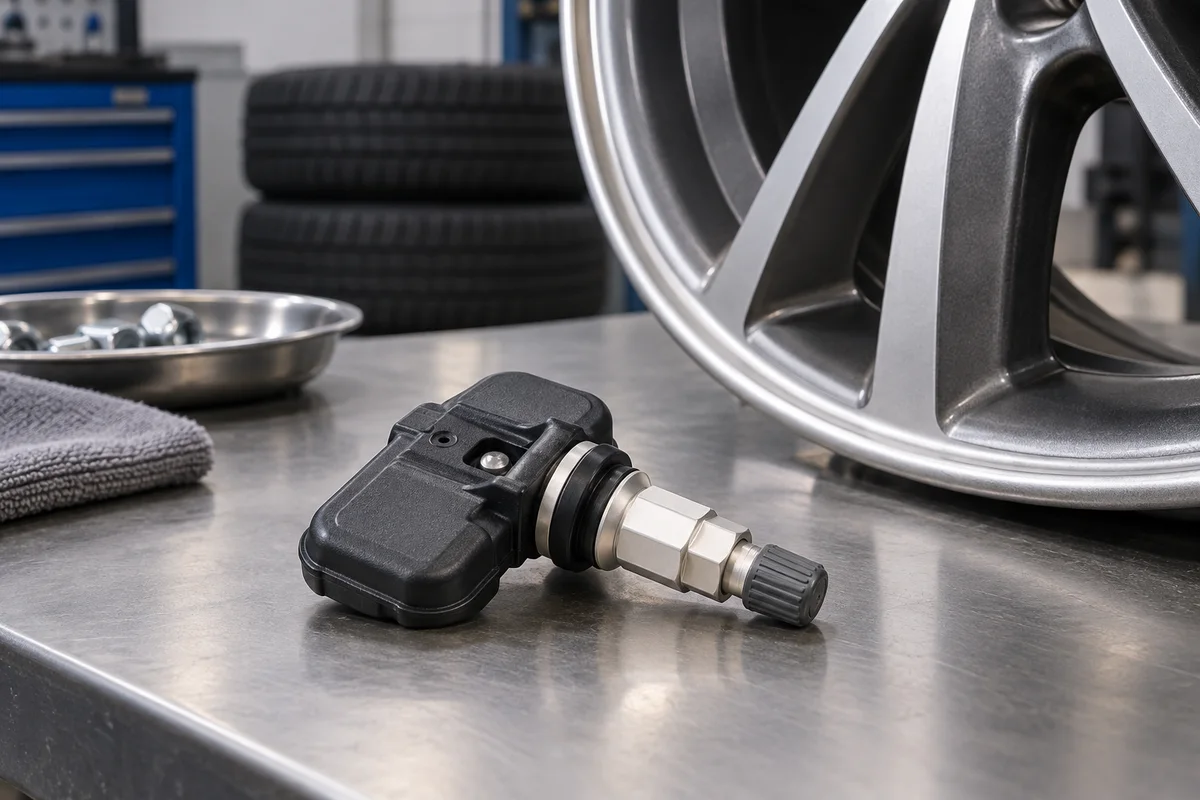
Avoid buying a sensor based only on an online photograph. Part compatibility and programming may matter, and an indirect system needs a different line of investigation. Ask the tyre specialist to establish which system the vehicle uses before proposing hardware.
Verify the repair in two ways
After the fault is corrected, confirm both the physical pressures and the system’s normal operation according to the handbook. Keep the information about any replaced sensor with the wheel records. Routine pressure checks still matter even when the dashboard returns to normal and no warning is present.
When arranging the visit, mention whether the warning began immediately after a wheel swap or several days later. Bring any sensor or wheel paperwork you received, since a part number can resolve a compatibility question more quickly than a description of the wheel’s appearance.