Begin with whether the car is secure
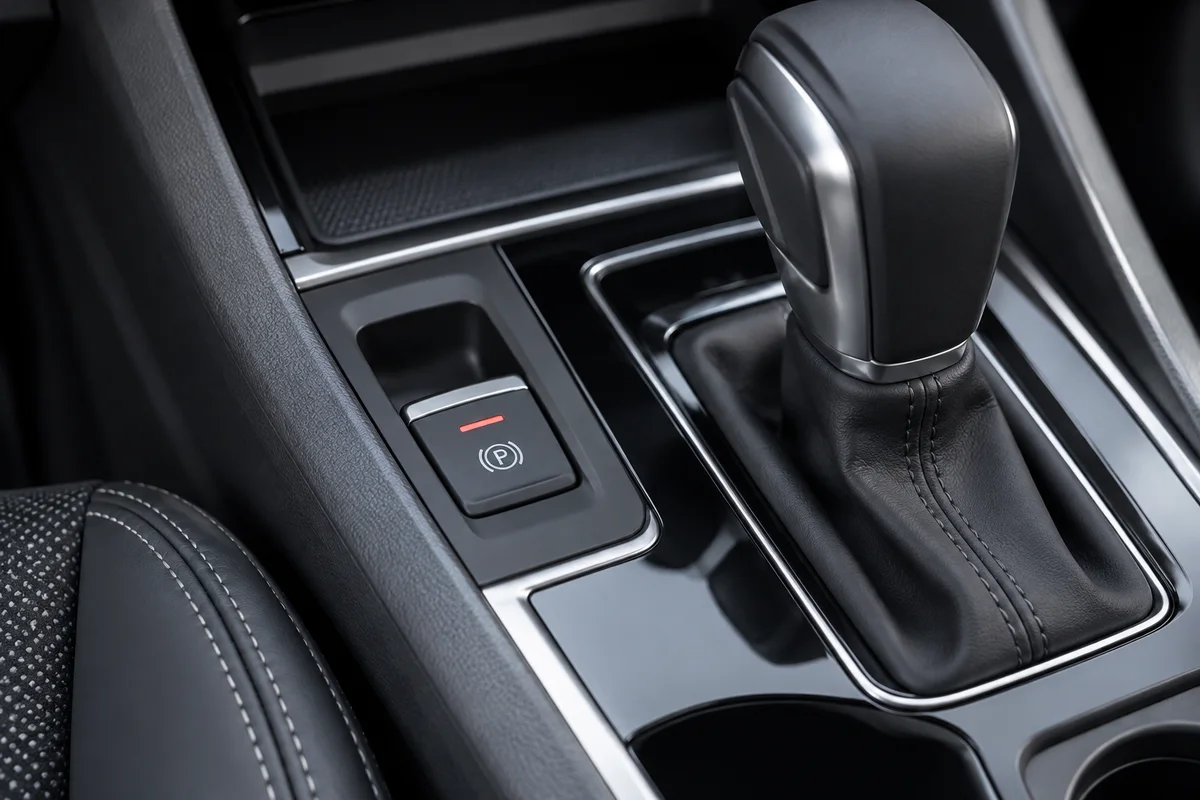
A parking-brake warning at a standstill raises two separate questions: is the brake holding, and can it release normally? Do not assume either answer from the sound of a motor or the position of a switch. Read the status message and follow the handbook’s procedure while keeping the vehicle securely stationary.
If holding ability is uncertain, avoid leaving the car unattended on a slope. Ask for assistance with securing it. Do not stand in its possible path of movement or ask another person to hold it by hand while you experiment with the controls.
Passengers should leave or approach the vehicle only when its stability is assured. If the fault occurs on a steep parking ramp, tell assistance about the slope and restricted space. The location can matter as much as the message when planning a safe intervention and choosing how to load the car.
Check the normal operating conditions
Some systems require the service brake pedal, a closed door, a fastened belt or a particular ignition state for certain automatic functions. The exact conditions vary. Checking those ordinary requirements is reasonable; forcing a release after a fault message is not.
Report a weak battery, a recent brake repair or a warning that followed long storage. Electrical supply and service procedures may be relevant. However, a low-voltage history does not prove the parking brake is safe to use or that a restart has repaired it.
Do not tow against a locked wheel
If the brake will not release, explain that before a recovery vehicle is sent. The operator may need equipment or a model-specific method to move the car without dragging locked wheels. Do not drive against the brake or use repeated acceleration to try to free it.
An emergency release, where fitted, is not a universal roadside trick. Its location, prerequisites and effect on vehicle security vary. Leave an unfamiliar release procedure to someone with the correct information and equipment. Never work beneath a vehicle that is supported only by a roadside jack.
Keep the repair result practical
At collection, ask whether both application and release were checked, including any automatic features relevant to the car. Learn which indicator confirms the parking state. If a warning returns, record the wording and circumstances rather than continuing a routine of switching the ignition until the brake appears to cooperate.