The warning changes what you can expect
A message about unavailable lane, cruise or collision assistance can appear during heavy rain, snow or poor visibility. Sensors have physical limits, and the car may suspend a function rather than provide unreliable help. Read which feature is affected; different assistance systems do not all use the same sensors.
Take responsibility for speed, distance and lane position without expecting the unavailable function to compensate. If the weather itself prevents safe visibility or control, find a safe place to stop. Clearing the warning is secondary to whether the journey can be continued safely.
Inspect only the accessible outside surfaces
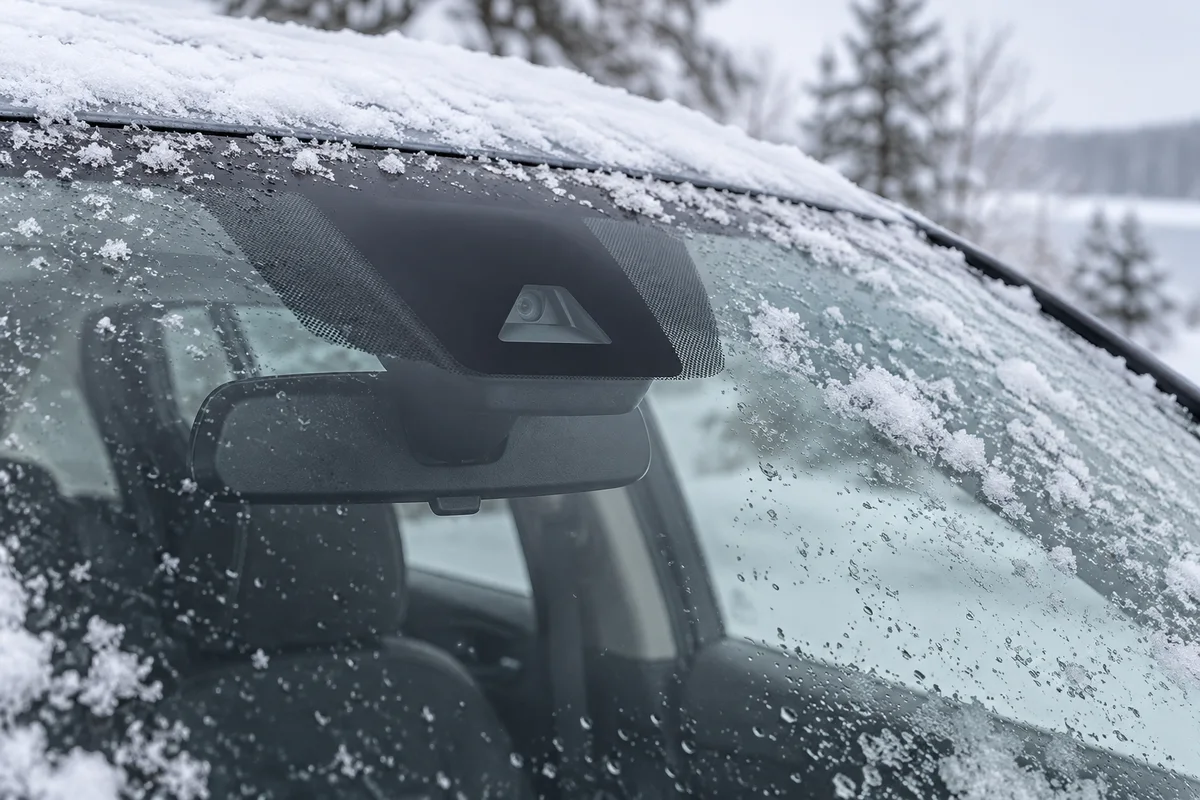
When parked safely, consult the handbook for sensor locations and cleaning instructions. Snow, ice or dirt may obstruct the windscreen camera area, grille or other sensor surfaces. Remove contamination gently using the approved method. Do not scrape delicate covers aggressively or use an unsuitable chemical to chase a quick result.
Leave the camera housing and internal electronics alone. A clean outer surface does not justify removing trim to reach the sensor. Never stand in traffic to clear a grille, and do not pour hot water onto frozen glass as an improvised solution.
A persistent message needs more than cleaning
Tell the workshop if the warning remains in clear conditions with clean surfaces. Mention a windscreen replacement, bumper repair, impact, new accessory or recent service. Alignment, calibration or another system fault may require investigation. Those are possibilities to assess, not proof that a particular sensor is broken.
Do not deliberately approach an obstacle or drift across markings to test whether assistance has returned. The display and prescribed professional verification are safer references. Some features also have operating-speed or road-marking conditions that make a casual test inconclusive.
Keep the invoice if a windscreen or bumper was recently replaced and ask whether the required calibration or checks were completed for this model. A visually neat repair does not by itself confirm sensor alignment. Provide the dates so the workshop can compare the start of the warning with the work without assuming a causal link.
Keep expectations realistic
Even when the message disappears, assistance remains subject to the limitations described in the handbook. Maintain normal observation and control rather than treating the cleared display as a guarantee of detection. Record recurring conditions so the workshop can separate predictable weather limitations from a fault that requires repair.