Stopped does not mean inactive
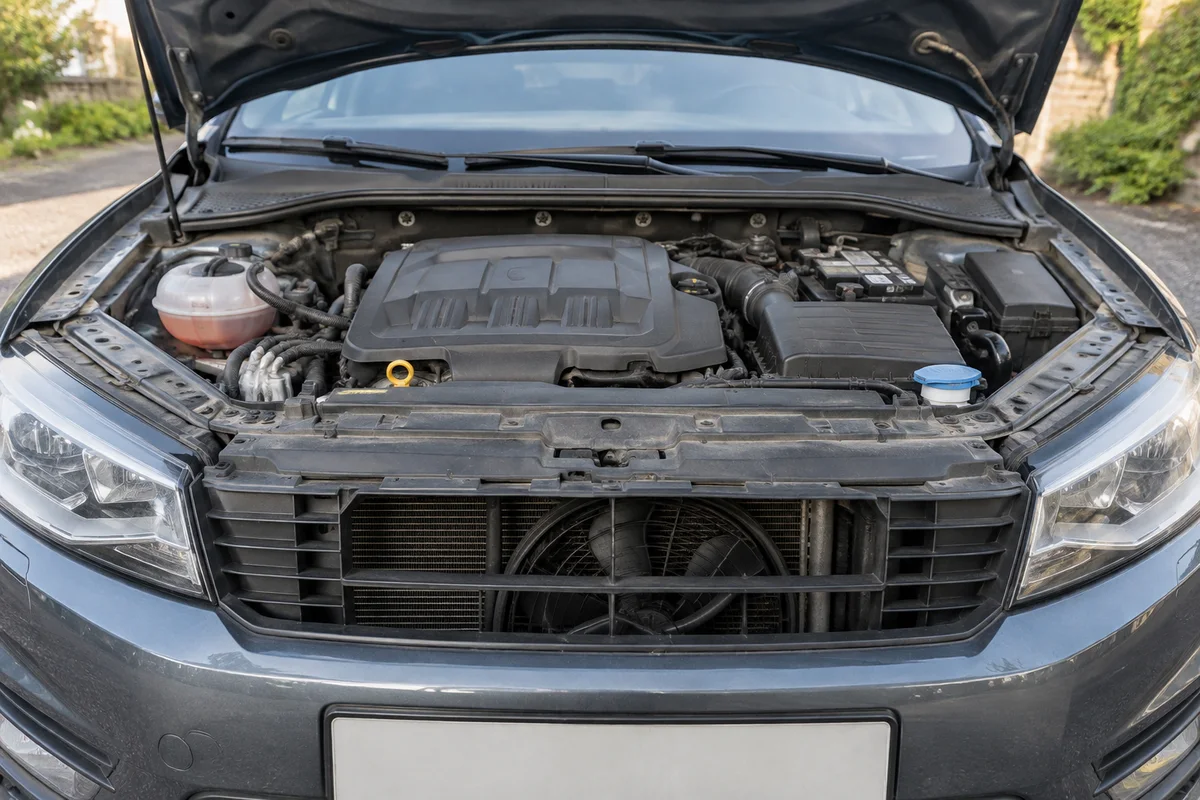
A fan continuing after the engine is switched off can be part of normal temperature management on some vehicles. The operating strategy depends on the model and recent conditions. It should not automatically be described as an electrical failure, but neither should every prolonged or changed noise be dismissed without checking the handbook and the car's other symptoms.
The practical point is simple: do not reach toward a fan because the ignition is off. It may be running already or start unexpectedly. Keep clothing, tools and hands away from the cooling area. A quiet engine bay is not a guarantee that every moving component will remain still while someone investigates a sound.
Compare with the recent journey
Note whether the car had just completed slow traffic, a warm-weather journey or another ordinary period of high cooling demand. Record whether this has happened before under similar conditions. A new pattern that occurs after short cold journeys deserves a different account from a familiar brief run after a demanding trip. Avoid assigning a universal normal duration from another owner's vehicle.
Watch for the vehicle's own temperature warnings or messages. If there is an overheating alert, steam or another serious symptom, follow the handbook and arrange help. Do not open a hot coolant cap or pour cold water onto hot components. Fan noise alone cannot tell you whether the cooling system has the correct fluid level or is working properly.
When to ask for an assessment
Contact a workshop if the behaviour changes markedly, continues unexpectedly, is accompanied by a warning or contributes to a starting problem afterwards. Describe when the fan began, the preceding journey and how the vehicle behaved. Do not disconnect the fan or remove a fuse to make the noise stop. Disabling cooling can create a more serious problem than the one you were trying to investigate.
Ask whether the observed behaviour matches the model's intended strategy and, if not, what checks are needed. On electric and hybrid vehicles, thermal management can involve several systems, so an engine-based explanation may not apply. Keep the report of any findings. The useful outcome is understanding the pattern for this vehicle, not declaring all after-run noise either harmless or faulty.