Take the message literally
An engine-temperature warning can arrive in traffic, on a climb or during a journey that felt entirely ordinary. Reduce demand and stop safely. Follow the vehicle’s specific instruction about shutting down; some manuals describe a brief idle step, while other messages require immediate switch-off. If there is steam or a serious stop warning, do not continue experimenting.
Avoid assuming that an unusually hot day makes the warning normal. The cooling system is meant to manage expected driving conditions. Likewise, a gauge that later falls does not establish that the reason for overheating has disappeared.
Let pressure and heat subside
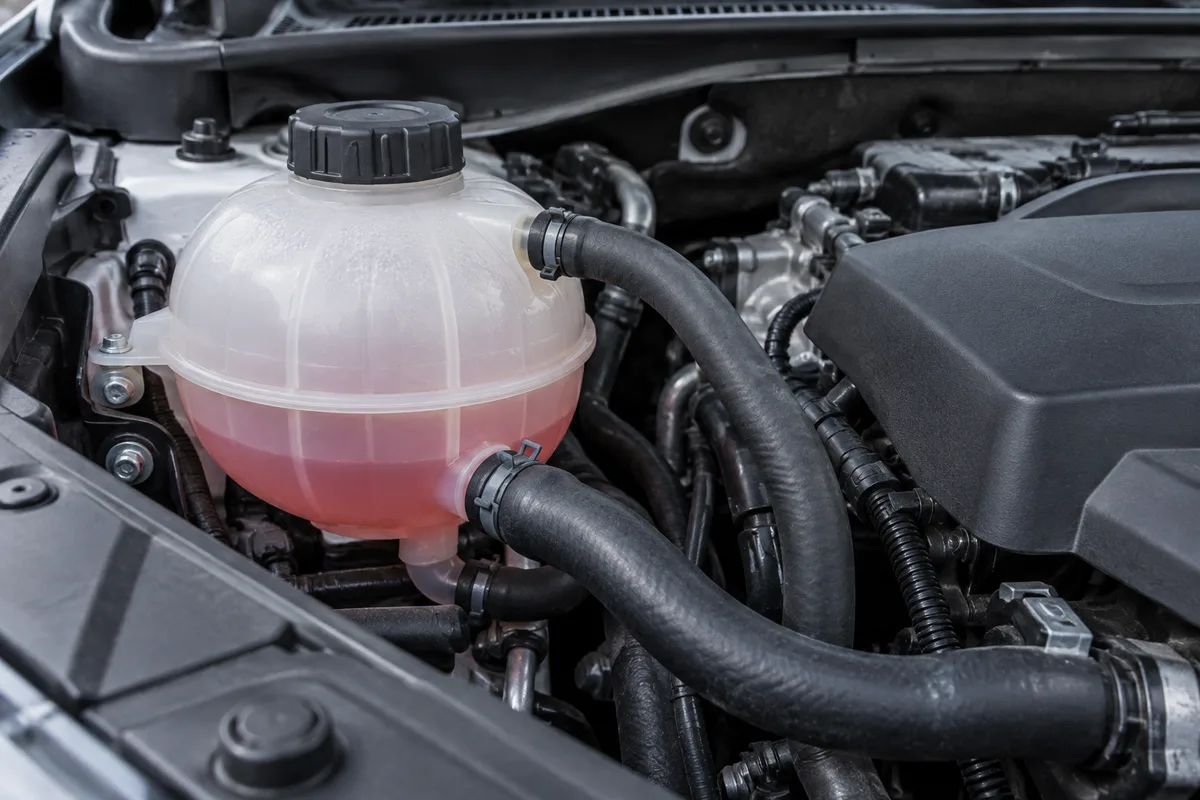
Never remove a hot coolant-system cap to look inside. Pressurised hot fluid can escape suddenly. Give the system time to cool and follow the handbook before any level observation. There is no universal waiting period that makes every overheated engine safe to open.
Look for visible clues from a safe position: steam location, fluid on the ground and the message displayed. Do not place hands near a cooling fan; it may operate unexpectedly. If opening the bonnet would expose you to steam or roadside traffic, leave the inspection to assistance.
Explain the circumstances, not a guessed component
Note whether the temperature rose at low speed, with air conditioning in use, after a coolant service or under a heavy load. A workshop can use those details when investigating flow, airflow, leaks and control faults. Naming a thermostat without evidence narrows the conversation too early.
Adding fluid, when authorised by the manual and safe to do so, does not repair a leak or restore a failed component. Do not repeatedly top up and set off again. Ask whether the vehicle needs recovery before attempting another journey.
After repair, keep an eye on the pattern
Keep the repair explanation and report any renewed temperature rise promptly. A stable gauge on one short trip is reassuring but not a reason to ignore recurring coolant loss. The original driving circumstances are useful when assessing whether the fault has actually been resolved.
Tell assistance whether the cabin heater suddenly stopped producing warm air as the warning appeared. That observation may help, but it is not a reason to keep the engine running for a test.