The engine is running, but the supply may not be
The battery symbol can appear normally before starting as part of a dashboard check. Once the engine is running, a warning that remains or returns needs attention. The vehicle may be using stored electrical energy without replenishing it correctly. How long that lasts is not something a dashboard lamp can predict.
Find a safe place to stop and contact assistance. Do not plan a journey around an internet estimate of how many kilometres remain. Battery condition, electrical demand and the nature of the fault all affect the outcome, and the car may stop unexpectedly.
Do not sacrifice visibility to save charge
Switching off a heated seat is different from switching off lights or demisting needed for safety. Maintain the equipment required to see, be seen and control the car while reaching a safe stop. Once parked, avoid leaving unnecessary accessories running while awaiting help.
Mention whether the warning arrived with a squeal, unusual steering effort, a temperature alert or a smell. Depending on the vehicle, an associated drive-system fault can affect more than charging. A second warning should be reported in its own right, not dismissed as a consequence you have already explained.
A battery purchase may miss the cause
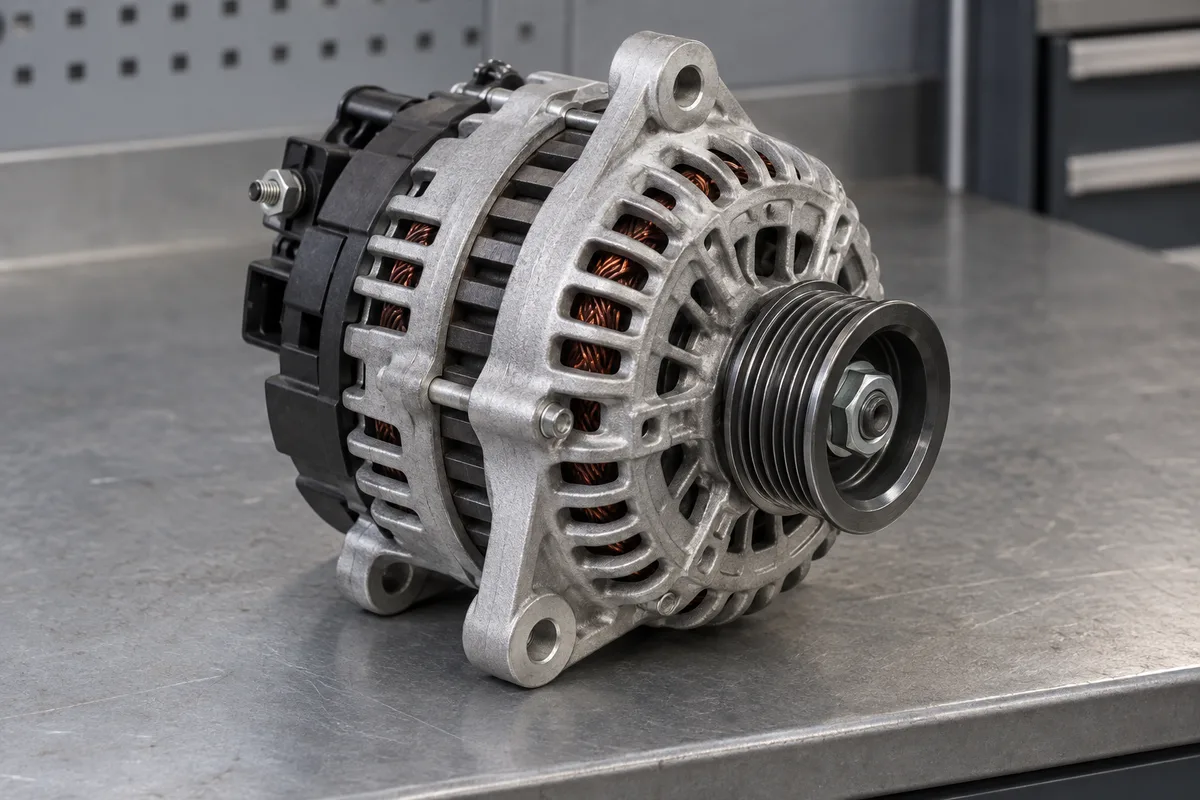
The charging circuit includes more than the battery. Connections, wiring, the charging device and its control system may need assessment. A new battery can temporarily supply energy while leaving the original problem untouched. Ask for the complete charging complaint to be investigated before deciding which component to replace.
Do not disconnect a battery terminal with the engine running as an alternator test. It is not a suitable owner diagnostic method and can create further electrical problems. Likewise, avoid reaching near belts or fans to inspect an engine that is running.
Preserve the sequence
Write down which lamp appeared first, whether the engine stopped by itself and whether a restart was attempted. That sequence helps distinguish the initial fault from the low-voltage symptoms that followed. Share it with the technician rather than arriving with a single assumed diagnosis.
A recent battery replacement, new accessory installation or earlier slow start belongs in the history, even if the connection to the warning is not yet clear.