Start with a stationary walk-around
Read the warning carefully: it may name a side, a lighting function or simply a lamp fault. With the vehicle safely parked, check the relevant exterior lights in their normal operating modes. A rear cluster can contain separate functions, so an illuminated tail lamp does not prove that its brake light or indicator works.
Use another person for a brake-light check only with the car secured and nobody standing where it could move. A safe reflection can help with a simple observation, but do not conduct checks in traffic. Never stare closely into an intense lamp while it is switched on.
Include number-plate lights, high-mounted brake lights and any trailer lights when they are relevant to the message. They are easy to overlook during a quick glance at the main clusters. A helper should describe which function was switched on, because a photograph of a glowing red lens alone may not distinguish tail and brake operation.
The warning may be intermittent
Note whether the message appeared after rain, a bulb replacement, a trailer connection or a bump. A lamp that works during the check may still have an intermittent connection or another fault. Tell the workshop which function was named even if you cannot reproduce the failure.
Do not tap or strike the lamp assembly to make it work temporarily. That can change the symptom without establishing the cause and may damage the housing. Keep moisture, a cracked lens or a loose external fitting as separate observations to report.
Replacement depends on the lighting technology
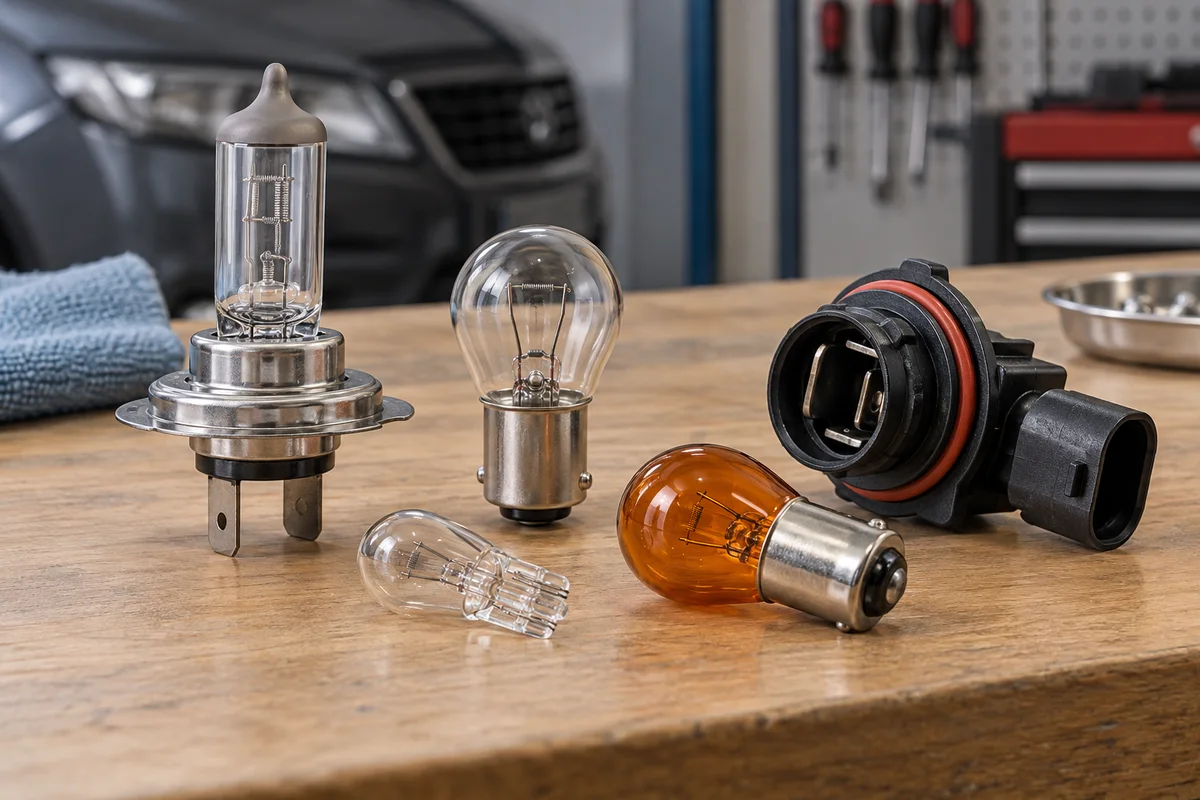
If the handbook describes an owner-replaceable bulb, use the exact type and follow its precautions. An LED assembly or high-voltage discharge lamp is not interchangeable with a conventional bulb procedure. Do not open sealed electronics or touch unfamiliar lighting equipment simply because a generic video makes it look accessible.
After replacement, check the actual function as well as the dashboard. If the warning remains, confirm the bulb specification and arrange diagnosis rather than fitting a resistor or bypass to fool the monitoring system. An unsuitable lamp may illuminate yet still fail to meet the vehicle’s requirements.
Plan around visibility
A failed light affects your ability to see or be seen, especially at night or in poor weather. Arrange repair before relying on that function. Do not use another lighting mode as a permanent substitute, and avoid assuming that a daytime check settles what will work on a dark journey.