What the warning can tell you
A brake-pad wear warning generally means that the monitored wear condition needs attention. It is not a precise remaining-distance calculator, and the monitoring arrangement differs between vehicles. Do not assume every pad on every wheel has its own sensor or that an unlit lamp proves all brakes are healthy.
Read the handbook’s instruction and arrange an inspection promptly. If there is grinding, reduced braking, pulling, an abnormal pedal or a red brake warning, stop safely and seek assistance. Those symptoms change the urgency and should not be folded into a routine pad-replacement appointment.
An inspection should cover more than the visible pad
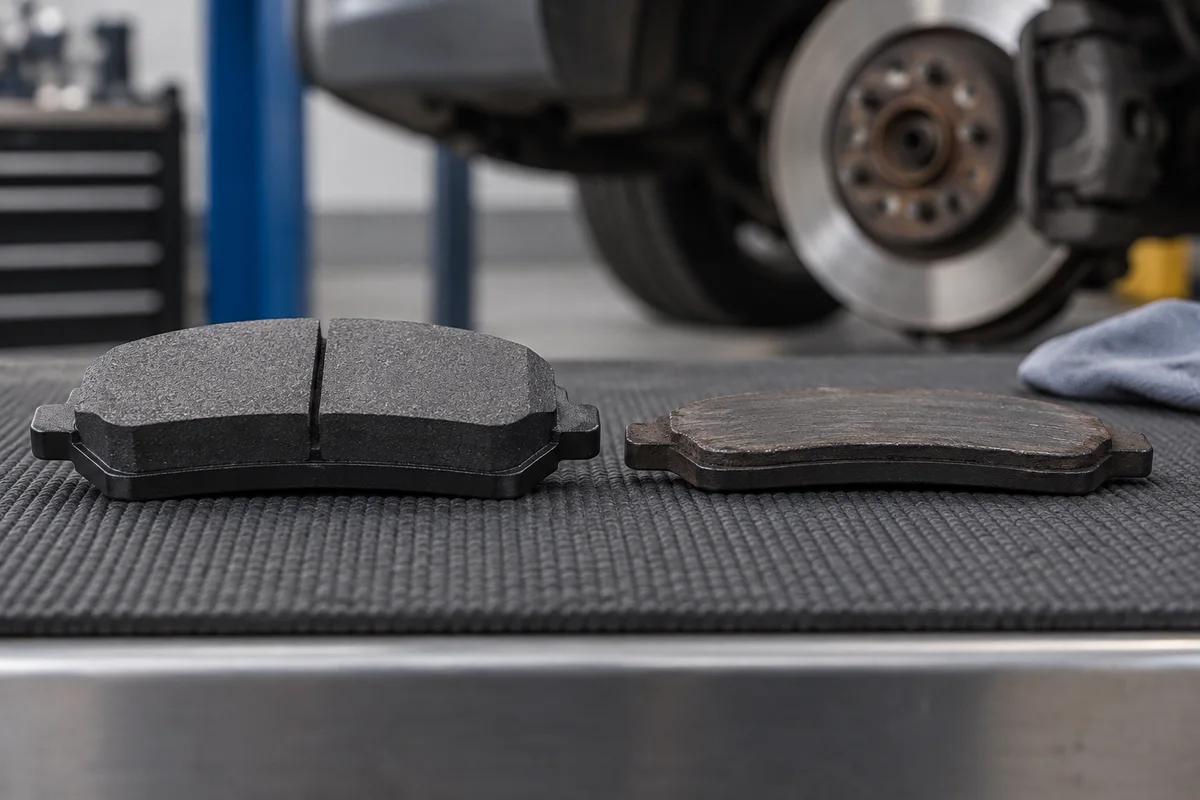
Looking through a wheel may show only part of one pad. It can miss an inner pad, uneven wear or a disc condition that needs attention. Ask for an assessment of the relevant axle and an explanation of any difference between sides, rather than a guess based on the easiest surface to see.
The workshop should distinguish normal wear from a problem causing abnormal wear. If a pad has worn much faster than expected, the reason matters to the next set. Likewise, replacing a sensor without examining the friction components risks treating the warning instead of the brake condition.
Ask whether the reported thickness refers to the friction material rather than the metal backing plate. You do not need to make the measurement yourself to request an understandable explanation. Photographs or recorded measurements from the inspection can make the difference between ordinary scheduled wear and an urgent condition much clearer.
Compare a repair proposal clearly
A useful estimate identifies the axle, pads, any discs or wear sensors, and the reason each item is needed. Ask whether measurements or observed damage support disc replacement. The goal is understandable evidence, not an automatic assumption that every associated component must be renewed.
Do not ask for the lamp to be bypassed to postpone the work. It is part of the vehicle’s warning system. If a wiring fault is suspected instead of wear, it still needs a proper diagnosis and restoration, with the actual pad condition checked independently.
After collection
Follow the workshop’s guidance for the newly fitted components and report any unexpected noise or braking change. Keep the measurements and invoice in the service history. A later warning is easier to interpret when the date, mileage and exact parts changed are known.