Ordinary braking and anti-lock control
ABS is designed to help prevent wheel lock during hard braking. A warning can mean that function is unavailable even though the conventional brakes still operate. That distinction matters: being able to stop gently in a car park does not demonstrate that the system will respond normally during an emergency.
Read the exact warning and handbook before deciding whether to move the car. A red brake lamp, abnormal pedal feel or a stop instruction changes the situation. In those cases, stop safely and arrange assistance rather than relying on the reassuring fact that the warning began as an amber ABS lamp.
Useful observations, without a road test
Notice whether the warning appeared immediately after starting, only after moving, or after work on a wheel or suspension component. Mention all of that when booking a check. Different control units may record useful information, so a basic engine-only code reader might not tell the whole story.
Do not deliberately brake hard to see whether ABS works. The missing protection would matter precisely during that experiment. Leave wheel-speed sensor testing, wiring checks and brake-system diagnosis to someone with the appropriate equipment and vehicle information.
Avoid the sensor shortcut
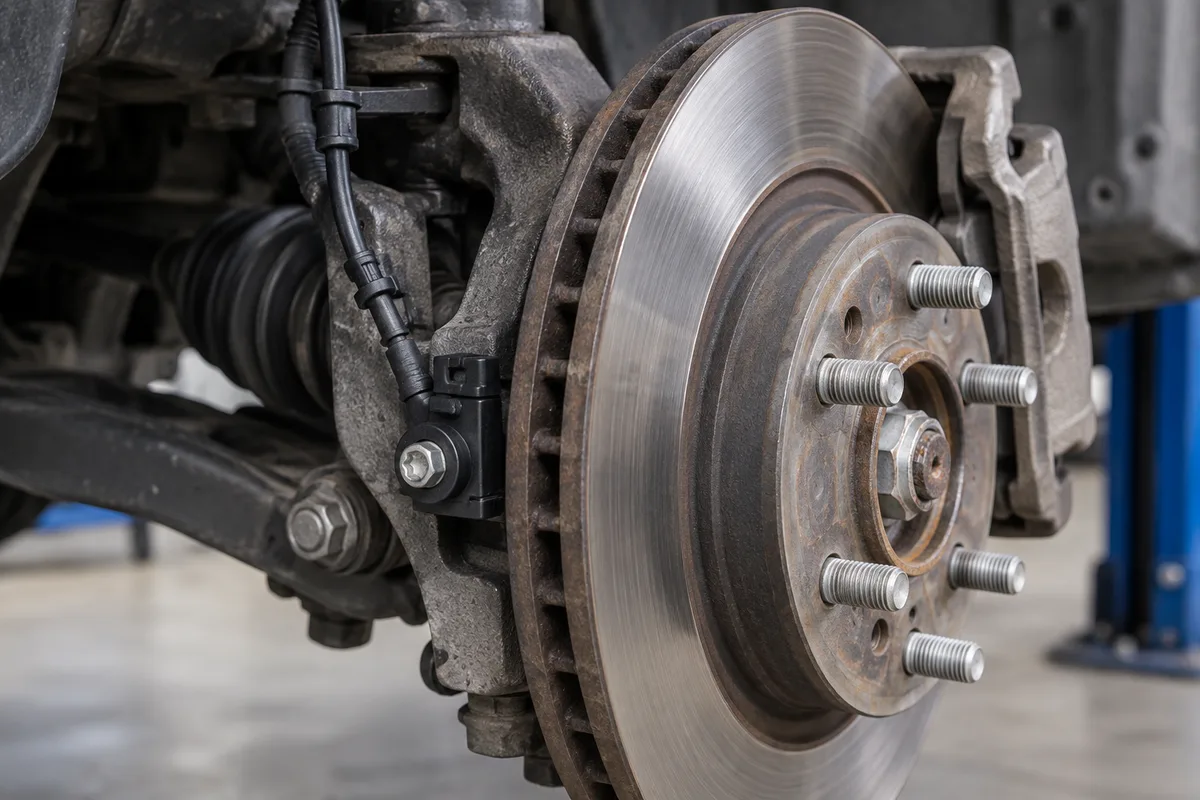
A wheel-speed sensor is one possible cause, not a diagnosis supplied by the light. Damage to wiring, a related rotating component or another system fault can produce similar symptoms. Ask what evidence supports a proposed replacement, particularly if several warning lamps appeared together.
If the handbook permits limited driving and a professional confirms that is appropriate, allow extra space and avoid unnecessary travel until repair. The absence of a dramatic symptom should not turn a temporary arrangement into the normal routine. Keep the appointment even if the lamp goes out intermittently.
After the fault is corrected
The final check should establish that the original warning has been resolved, not merely erased. Keep the diagnostic explanation with the invoice. It gives the next workshop a useful reference if the same combination of warnings appears again.
Tyre size changes, a temporary spare wheel or recent wheel work belong in that history too, even if they eventually prove unrelated.