Identify the architecture first
Hybrid is a broad description. A mild hybrid, a full hybrid and a plug-in hybrid can offer different behaviour, equipment and maintenance questions. Establish the exact model and powertrain before interpreting a seller's demonstration. An engine that stops and starts during normal operation may be expected, while a promise of electric-only driving needs to match what that particular vehicle is designed to do.
Ask for records that belong to this vehicle
Review the ordinary maintenance history as well as any hybrid-system checks. Ask what the check covered, when it was performed and which vehicle it identifies. A report showing no fault at one visit is not automatically a detailed measurement of remaining battery capacity. Read the actual result and limitations rather than treating every document with the word health as equivalent.
If the seller mentions additional coverage linked to servicing or a battery check, verify the current conditions for the exact vehicle and market with the provider. Age limits, eligibility and transfer arrangements can vary. Do not assume another owner's experience or a general advertisement guarantees the same terms for your purchase. Keep the applicable documents with the rest of the file.
Keep the viewing non-invasive
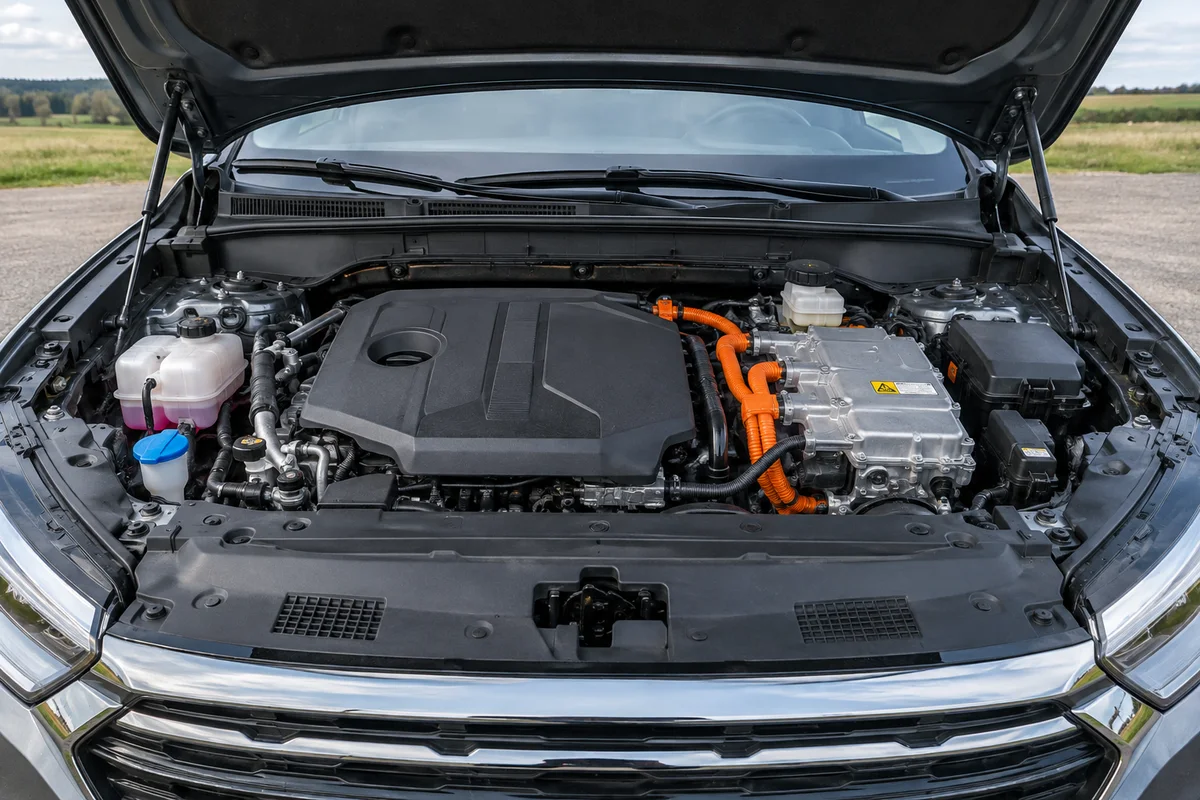
Do not open high-voltage enclosures, remove covers around orange cables or attempt battery measurements. The absence of engine noise does not mean the vehicle is inactive. Follow the handbook for its ready state and normal controls. Ask a suitably qualified inspector to assess any warning, damage or unusual operation involving the hybrid system.
During an authorised ordinary test drive, observe smooth operation and record messages without trying to force the car into a particular energy mode. Battery charge, temperature and control strategy influence when the engine operates. A brief display of electric running is not proof of battery health, just as engine operation during the viewing is not automatically evidence of a fault.
Do not overlook the rest of the car
Tyres, brakes, suspension, body condition and water ingress still matter. A reassuring hybrid report does not inspect every ordinary component, and a general mechanical inspection may not deeply assess the hybrid system. Choose the scope you need and make exclusions explicit. The best purchase file combines the relevant specialist information with the same careful checks you would give any other used car.
For a plug-in hybrid, include the charging equipment and an appropriate charging check in the agreed scope. A normal engine-based test drive does not by itself establish that the plug-in functions operate as expected.
Ask whether any reported battery work concerned the ordinary low-voltage battery or the traction battery. Sellers sometimes use the same word for both. The distinction changes what the invoice tells you about the hybrid system and prevents a routine replacement from being mistaken for a major traction-battery repair.