Identify the metric
State of charge and battery health are different ideas. A display showing a nearly full battery describes the energy currently available relative to the system's estimate, not a complete assessment of how the battery has aged. A range prediction is different again: recent driving and conditions can influence it. Do not treat these three numbers as interchangeable evidence about a used vehicle.
Read the method and date
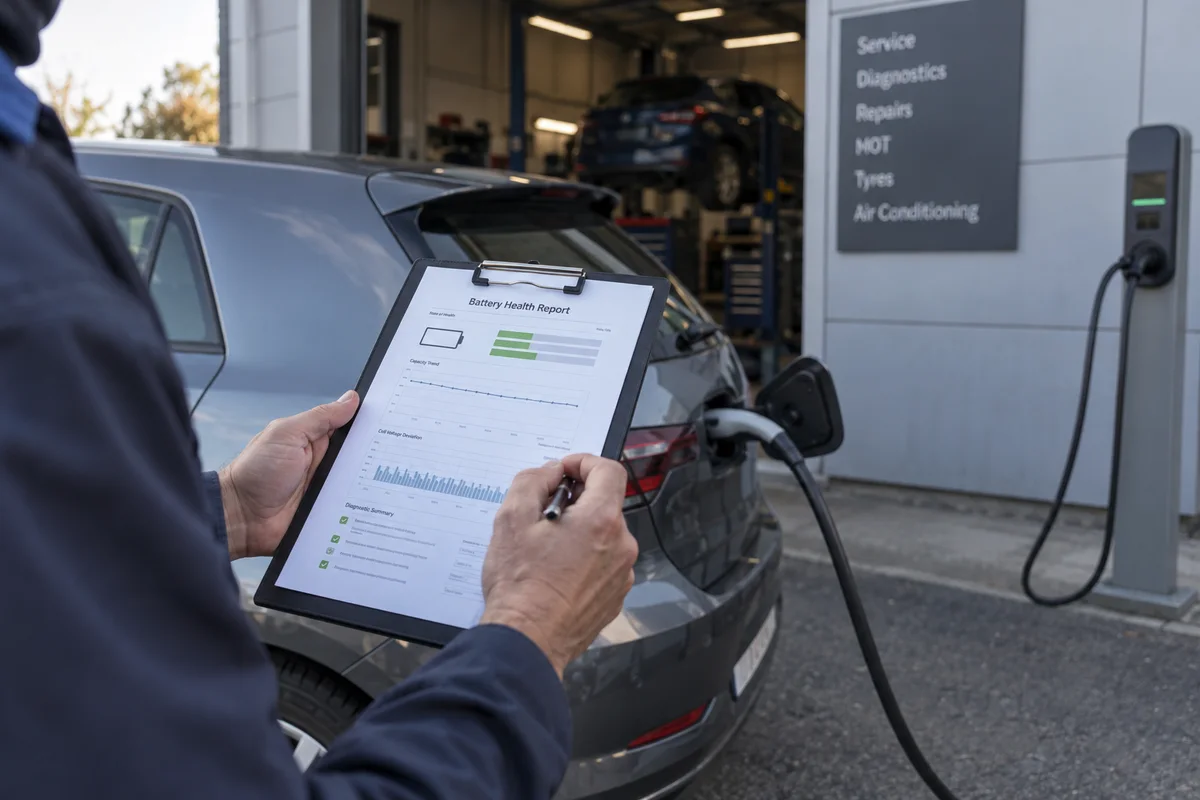
Ask who produced the report, which vehicle it identifies and how the result was obtained. Some assessments estimate retained capacity, while others report faults or other system information. Read the methodology and limitations rather than comparing percentages from unrelated tools as though they came from one standard test. A neat certificate cannot remove differences in what the underlying process measures.
Check the date and mileage, along with any relevant repair or battery-replacement history since the report. A result from a previous battery or a much earlier period may not describe the current vehicle. Ask for clarification if the report's identity or timing is unclear. Do not invent a normal threshold from another model or assume one percentage has the same implication for every chemistry and design.
Keep testing within the manufacturer’s procedure
Some vehicles provide a battery-health function with specific conditions and limitations. Follow the current instructions for that exact model and software, and let an appropriate professional arrange testing when needed. Do not enter service menus or begin a lengthy discharge procedure during a viewing simply because an online video shows it. A seller's consent does not make an unsuitable test technically appropriate.
Never open high-voltage equipment or probe charging connections to verify a report. Inspect accessible equipment visually and refer damage, warnings or unusual charging behaviour to a qualified specialist. A short successful charge demonstrates one event, not every charging mode or the full condition of the battery. Keep that observation in proportion to what was actually tested.
Combine the report with the ownership question
Consider whether the vehicle's usable capability suits your ordinary journeys, climate and charging arrangements, using reliable model-specific information and a suitable assessment. Verify any remaining coverage directly under its actual terms rather than assuming a health result guarantees eligibility. Finally, inspect the rest of the car. A battery report can add valuable evidence, but it does not assess tyres, structural condition, water ingress or every other component you will own.
Keep the original report, including its explanatory notes, rather than a cropped percentage.
A battery report should also be read alongside any fault messages currently present. A capacity estimate and a fault-free system are separate findings. Ask a specialist to explain a current warning even if the retained-capacity figure looks reassuring, rather than allowing one favourable metric to override another unresolved observation.