Look under useful light
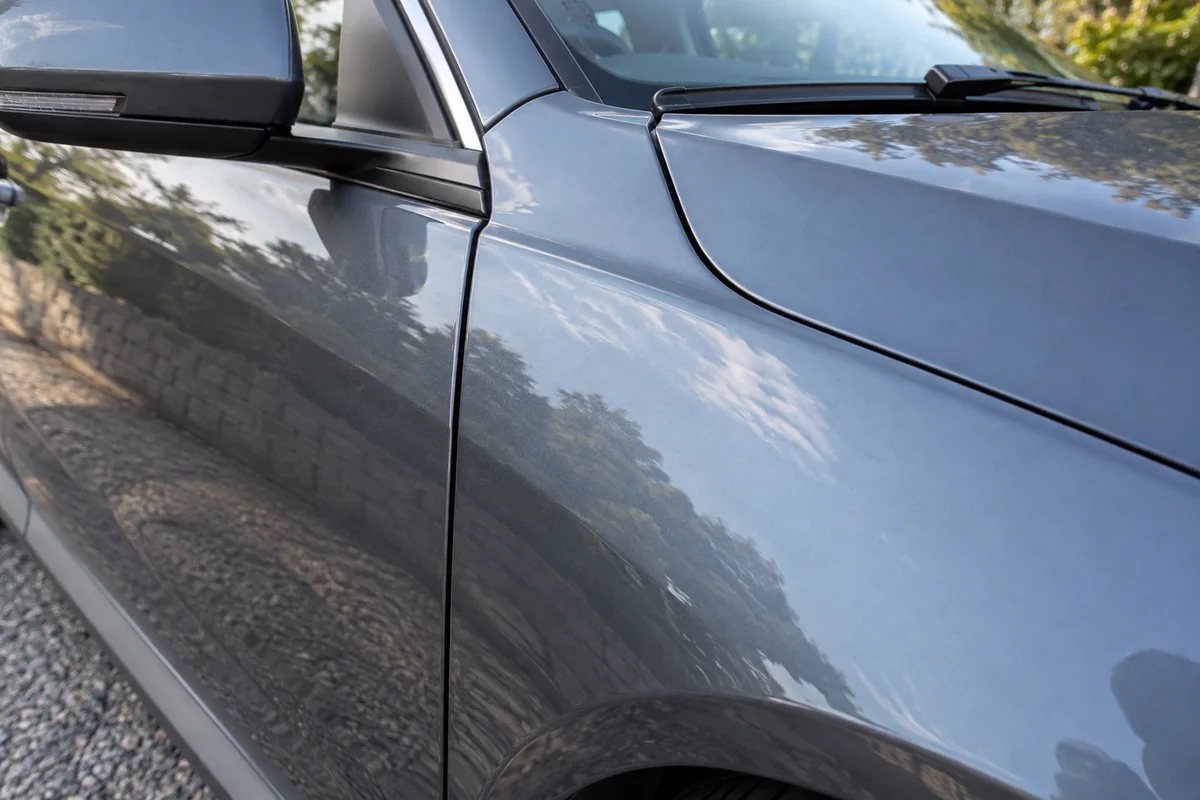
View the car in daylight from several ordinary angles. Reflections, metallic paint and the shape of adjacent panels can change how colour appears. A wet surface or harsh artificial light can also conceal or exaggerate a difference. Note what you see without treating a single photograph as decisive evidence of either original paint or a previous repair.
Compare corresponding areas and look at visible edges, trim alignment and the way doors close normally. A gap that differs from the opposite side deserves a question, but production variation, adjustment and repair can have different implications. Do not push panels, remove seals or scrape paint to investigate. A seller's vehicle is not a suitable place for improvised destructive testing.
Ask for the repair story
If a panel was repaired or repainted, ask why and whether records or photographs are available. A documented cosmetic repair is different from an unexplained structural concern, but its quality still cannot be certified by a verbal description. Let an independent body specialist or suitable inspector assess issues that affect alignment, structure or safety.
A paint-thickness measurement, if performed by someone competent with suitable equipment, adds information rather than a universal verdict. Different materials and measurement conditions matter. Do not use an arbitrary number from a forum as proof that a car is unsafe or that an unmeasured panel must be untouched. The reading needs interpretation with the vehicle and visible findings.
Keep appearance separate from condition
Good cosmetic work can make a surface look excellent without answering every mechanical or structural question. Poor cosmetic work can be unattractive without revealing the full scale of the original event. Record the concern accurately and ask what the inspection can establish. A report should distinguish observations from conclusions that would require more access or specialist assessment.
If the seller promises corrective work, agree the specific area and how you will inspect it before handover. Do not let fresh polish replace an explanation of a persistent alignment concern. Combine the exterior observations with the vehicle history and a professional assessment where needed. You are trying to understand the car's present condition, not solve its entire past from the angle of a reflection.
Photograph the area from a wider angle as well as close up, with permission. The wider view preserves which panel and position were involved, preventing a later inspector from having to guess where an isolated detail belongs on the vehicle.