Choose conditions that let you see
A wet, dark or tightly parked car is difficult to assess fairly. Ask to view it in daylight with enough space to walk around safely. Rain can hide surface differences, while strong reflections can make a panel look more or less even than it is. If the conditions are poor, recognise the limit rather than pretending a hurried glance was a thorough inspection.
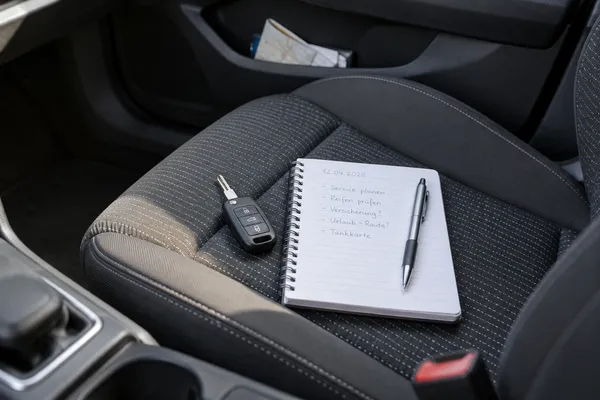
Walk around once for the overall impression before focusing on individual marks. Check that the vehicle corresponds to the advertised body style and equipment. Then work in a consistent direction so you do not inspect the attractive side twice and forget the other. Take notes with the seller's agreement, keeping registration and personal details out of anything you later share publicly.
Separate cosmetic observations from structural questions
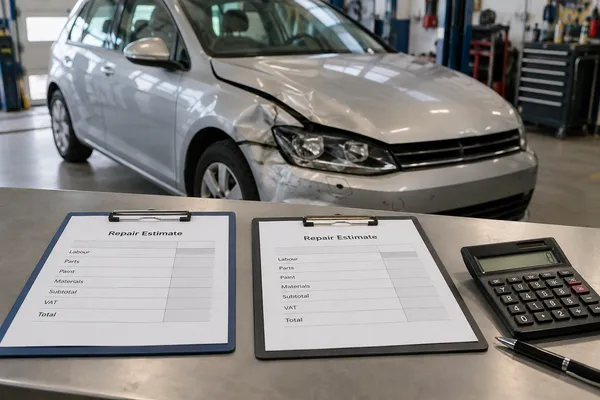
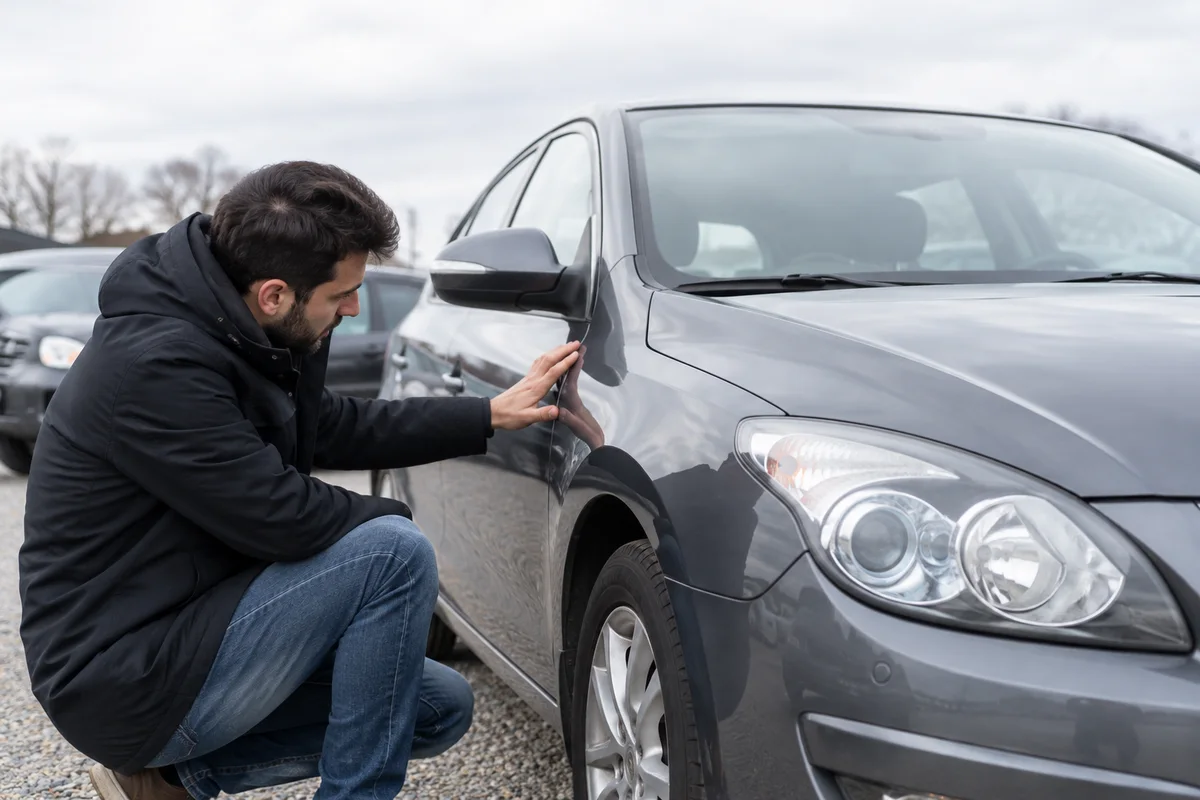
Look at panel alignment, visible paint differences, lamp condition and accessible trim. A scratch can be ordinary wear; a mismatch may reflect a previous repair without revealing its quality or severity. Neither should be interpreted from appearance alone. Ask for the history and let an independent professional assess anything that raises a structural or safety question.
Open doors, the boot and other normal access points with permission. Check that they operate without unusual force and look at the visible edges and seals. Do not remove trim, climb underneath or use tools on a vehicle you are viewing. Areas that cannot be seen properly belong in the scope of an appropriate professional inspection.
Make the walkaround part of the decision
Compare what you observed with the advertisement and documents. Ask about differences calmly and record the explanation. If the seller offers to repair an issue before handover, clarify exactly what is promised and how you will confirm completion. Do not let a vague assurance make an unresolved observation disappear from your notes.
A tidy exterior is not proof of good mechanical condition, just as a few cosmetic marks do not automatically make a vehicle unsuitable. Combine the walkaround with records, functional checks and a safe test drive or independent inspection as appropriate. The point is to see the car clearly enough to ask useful questions, not to certify a complex machine from its paintwork.
Look at the same area again after changing your viewing angle. A reflection that disappears with one step should not be recorded as permanent paint damage without a closer, non-invasive look.