Begin with the controls you will use
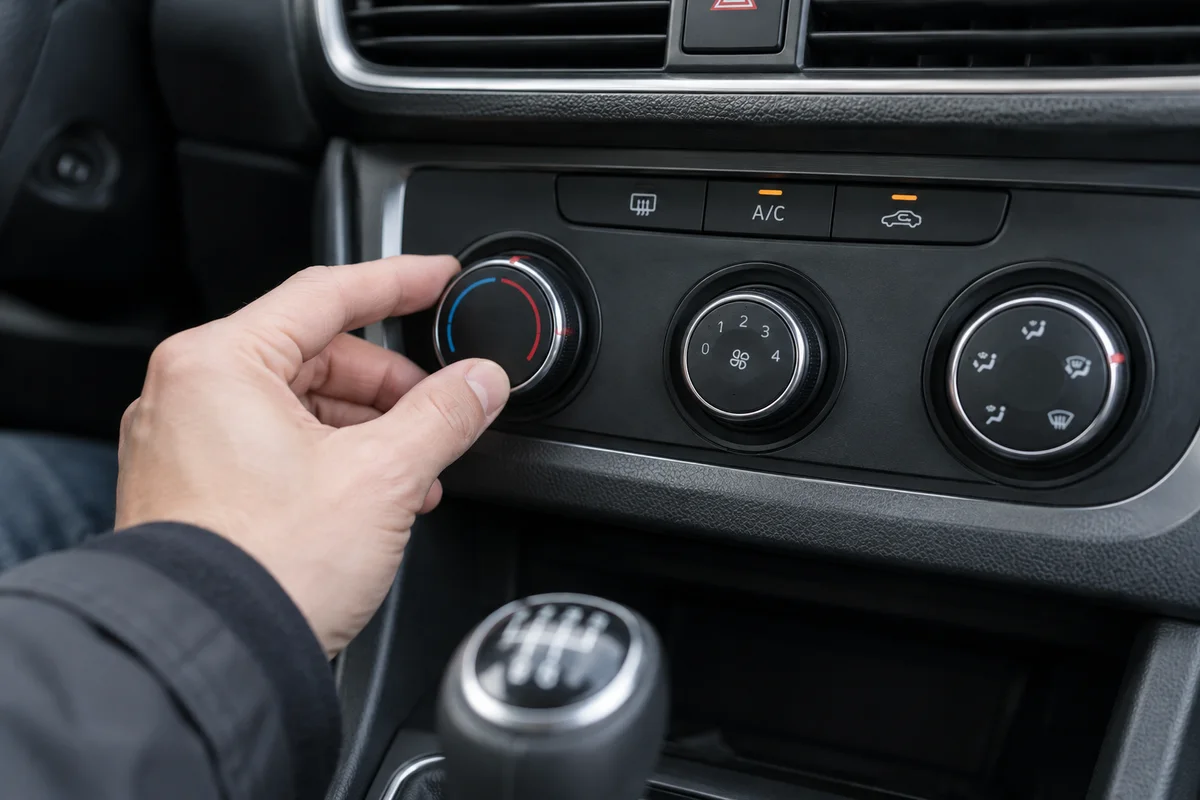
A mild day makes it easy to leave the climate system untouched during a viewing. Take a few minutes while parked to understand the temperature, fan and distribution controls. Ask the seller how automatic and synchronised modes work. A system set incorrectly can appear faulty, while one left on a single pleasant setting can conceal a function you have not examined.
Check whether the fan responds through its ordinary settings and whether air reaches the selected outlets. Compare matching left and right vents when the settings are aligned. Note a difference between weak airflow and air that is plentiful but not at the requested temperature. The distinction will matter if you later ask for an inspection or a repair.
Recognise what the weather prevents you checking
Heating and cooling need appropriate conditions and time. A brief cold-engine viewing may not establish heating performance, while very low outside temperatures can affect air-conditioning operation. Do not invent a pass or fail when the required condition was absent. Record what could not be assessed and ask whether an independent inspection can address that limitation.
Try the normal windscreen-demisting mode and observe the outlet response without creating artificial fog or pouring water inside. Check rear demisting indicators and ask about any known faults, but remember that an illuminated button does not prove the heated element works throughout the glass. A professional can make a more meaningful assessment where the conditions do not allow an obvious observation.
Do not accept a guessed refill as a diagnosis
If cooling seems ineffective, a seller may say it only needs refrigerant. That could be part of the eventual service, but the cause of poor performance has not been established by the statement. Ask for a documented assessment rather than estimating the repair from optimism. A recurring loss, control issue and airflow problem are not interchangeable jobs.
Record smells, clicking sounds and dampness as separate observations. Agree how any promised repair will be documented and checked before handover. Afterward, test the originally affected function under suitable ordinary conditions. The objective is not a perfect laboratory measurement during a viewing; it is knowing which everyday functions work, which remain uncertain and which require an explanation before you commit.
If the car has rear climate controls, include them when they matter to your use. A functioning front system does not establish that rear passengers can adjust their own temperature or airflow as advertised.