Build a timeline first
Lay the available records in date order and compare the mileage recorded at each visit. The aim is not to diagnose fraud from one awkward number; clerical errors and incomplete records exist. It is to identify gaps or inconsistencies that need an explanation before you rely on the history. Ask for clarification while the seller still has access to the supporting documents.
Look for operations, not just attendance
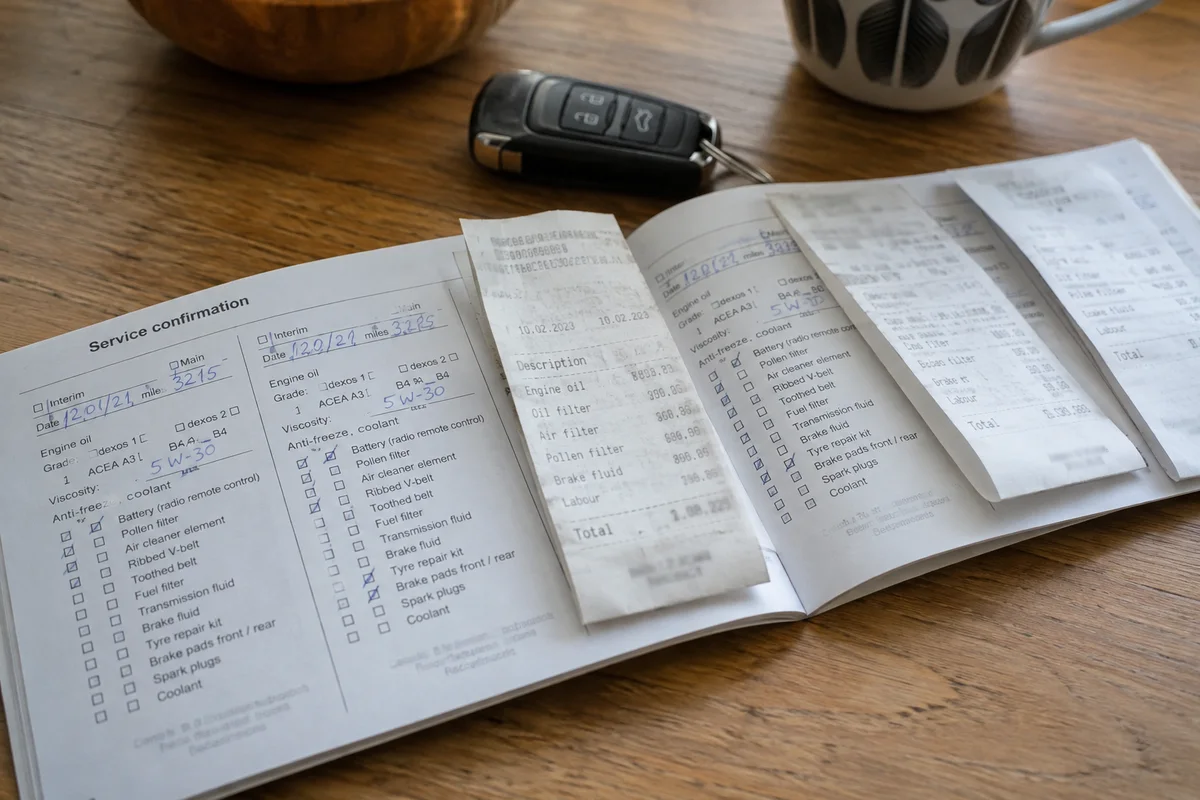
A stamp may show that a vehicle attended a workshop without telling you exactly which maintenance items were completed. Invoices or detailed digital records can add the description of the work and parts used. Compare those entries with the manufacturer's schedule for the exact engine, transmission and market, including time-based requirements where applicable. A service label is not a universal package.
Some important operations occur less often than routine oil servicing. Do not assume they were included simply because the book has regular stamps. Ask specifically for evidence relevant to this model, such as a scheduled belt-related operation where the manufacturer requires one. Avoid applying an interval from another engine that happens to share the same model name.
Treat missing evidence honestly
A seller's recollection that work was done is not the same as a dated record. It may be accurate, but your decision should distinguish documented history from an unverified statement. Ask whether the supplying workshop can provide a copy through an appropriate authorised request. Do not expect access to another person's private records without permission.
A digital history can also be incomplete if work occurred outside the system that stores it. Conversely, a thick folder is not automatically a complete maintenance record. Check whether the documents belong to this vehicle and whether they cover the period claimed. Receipts for accessories, cleaning or unrelated purchases do not fill a gap in scheduled mechanical work.
Use history alongside condition
A strong maintenance trail is valuable context, not a substitute for examining the car. Arrange an appropriate independent inspection when needed and share the records so the findings can be compared. Ask what maintenance is currently due or uncertain rather than assuming a recent visit settles every requirement. The best outcome is a clear account of what is known, what is missing and what needs attention after purchase.
Check whether mileage is recorded in kilometres or miles. A change of unit between documents can create an apparent inconsistency that needs conversion before it can be interpreted.
Make a separate note of the latest documented operation for each important item rather than assuming the most recent invoice resets every maintenance interval. One visit can address only part of the schedule, leaving another time-based requirement unchanged.