Find out what is actually being supplied
Words such as original, equivalent, premium and budget can mean different things in ordinary conversation. Ask the workshop to identify the type and source of the proposed part clearly enough that you understand the choice. The relevant question is whether it is suitable for this exact vehicle and repair, not whether its box uses impressive language.
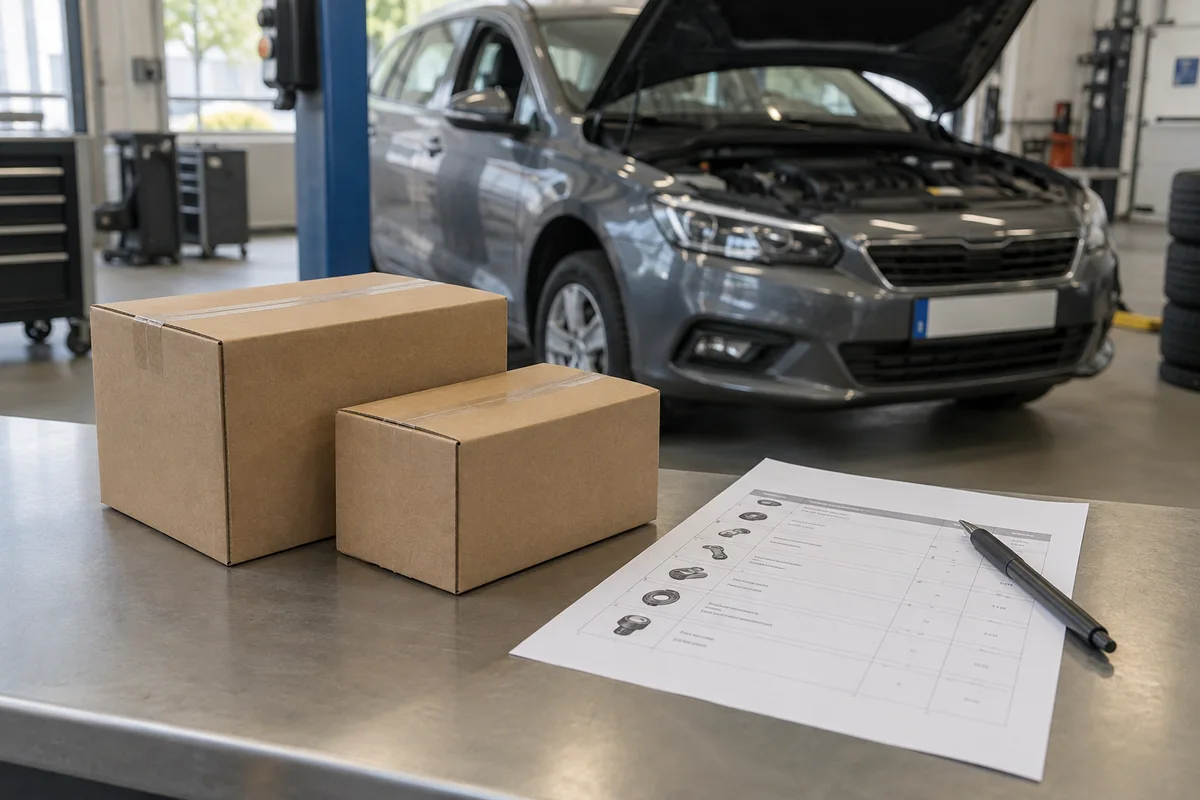
Check whether the estimate describes a new component, a remanufactured unit or another option. If an old component must be returned as an exchange item, ask how that affects the amount shown and the handling of the original part. Do not assume that every remanufactured product has the same process or that every new item is automatically equivalent in specification.
Connect the specification to the job
Some parts require a precise vehicle variant, software relationship or fitting procedure. A broadly similar appearance is not enough. Ask whether the workshop has matched the component to the vehicle identification and any relevant production differences. You do not need to become a parts-catalogue expert; you need confidence that compatibility was checked rather than guessed from the model name alone.
Ask about any necessary associated items and operations. A component price on its own may not include seals, fluids, coding or calibration where those are needed. Equally, do not demand every possible extra on a job that does not require them. The workshop should explain which additions follow from the repair procedure and which are separate recommendations.
Keep promises specific
If durability or coverage is part of the comparison, ask for the applicable written terms instead of relying on a general assurance that the part is guaranteed. Conditions and remedies depend on the supplier, workshop and jurisdiction. This guide cannot turn a marketing phrase into a universal legal promise. A clear record is more helpful than an argument over what a vague word should have meant.
Before approving, compare the complete fitted proposal with any alternative on the same basis. At collection, retain the invoice description and relevant paperwork. If a different part was fitted from the one agreed, ask for the reason and updated details. The objective is a suitable, traceable repair with understandable choices, not choosing solely by brand recognition or automatically buying whichever line has the lowest number.