Understand which records are being searched
A vehicle-history service may search specified sources for events linked to the vehicle identity. Its coverage depends on the provider, country, record availability and timing. Read what the service actually includes rather than assuming the phrase 'full history' means every repair, accident or ownership detail that ever existed. A report is only as broad as its stated data sources.
Check that the identifier used belongs to the car you are viewing. An accurate report for the wrong vehicle is not useful evidence. Review the date of the search and any limitations explained by the provider. If the vehicle has moved between countries or record systems, ask how that affects coverage instead of assuming one search follows it everywhere without gaps.
Separate absence of a record from absence of an event
A result with no listed concern may mean that no relevant record was found in the sources checked. It does not prove that the car has never suffered damage or that all previous maintenance was completed. Some events may not enter the databases used, while others may appear only later. Avoid turning a reassuring summary into a stronger claim than the report itself makes.
Likewise, a recorded event needs interpretation. Ask for the associated documents and a suitable assessment rather than inferring present safety from a brief label alone. The condition and quality of any subsequent repair remain separate questions. An old entry does not tell you whether current mechanical systems operate properly, just as a blank history does not show that they do.
Combine different kinds of evidence
Use the report alongside identification checks, service records, a viewing and an independent inspection where appropriate. Each addresses a different part of the decision. A mechanical inspector may identify wear or a leak that no history database could reveal. A history search may raise a documentary question that a road test would never answer.
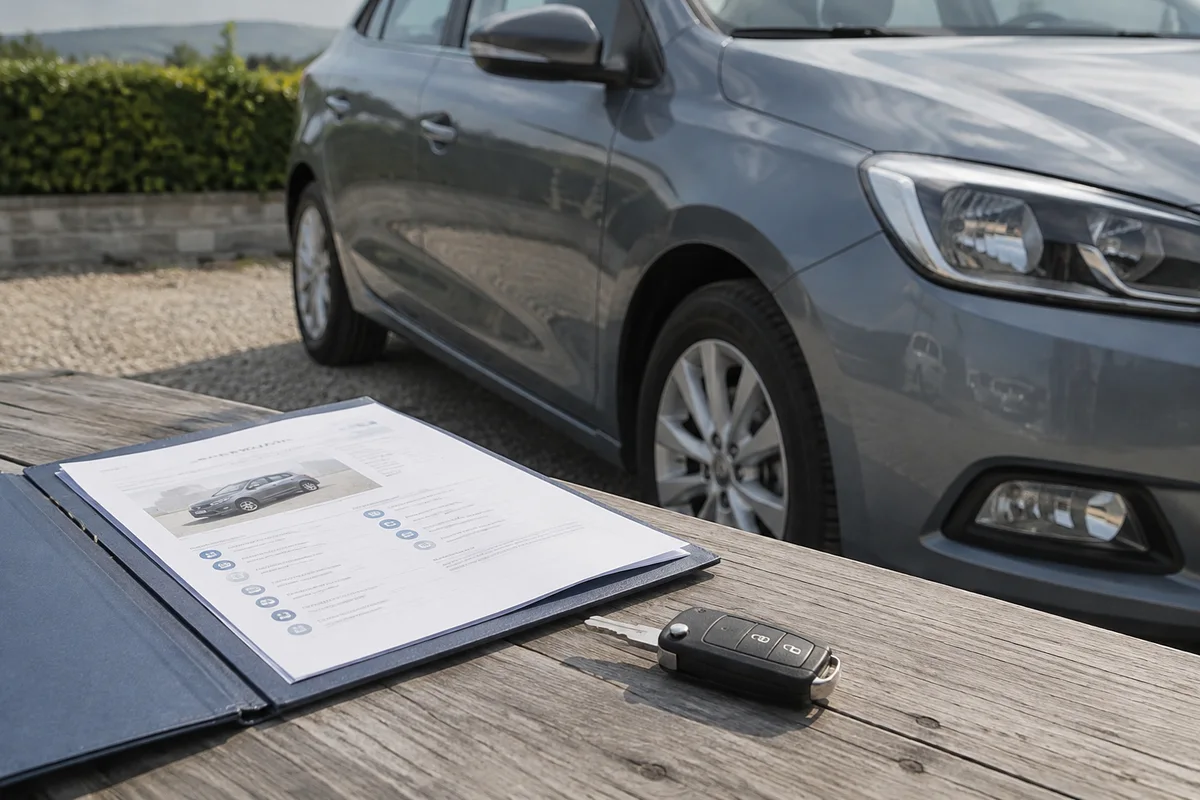
If the seller supplies a report, verify its date, vehicle details and provider rather than relying on a cropped screenshot. Obtain clarification directly through legitimate channels where needed, without sharing unnecessary personal information. Keep the result with the rest of the purchase file. The goal is a coherent picture assembled from several sources, not a single green summary that is expected to do every job.
Save the complete report rather than only its summary page. Definitions and coverage notes often explain what a reassuring headline does and does not mean, and they may matter when another document appears inconsistent.