Return to the original complaint
Begin with the problem that brought the vehicle in. Ask what was found, what was changed and whether the original symptom was reproduced during the investigation. This keeps the conversation anchored to the reason for the visit rather than to a list of component names. If several concerns were booked, check them individually rather than assuming one repair answered them all.
Ask how the result was verified. A cold-start problem, an intermittent warning and a constant noise need different forms of assessment. The workshop may have completed the repair but still need particular conditions to confirm every aspect. A clear account of what was and was not checked is more useful than a general assurance that the car seems fine now.
Read the paperwork before leaving
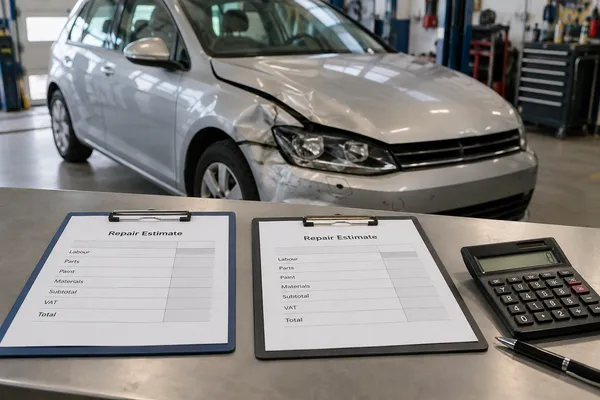
Compare the invoice description with the agreed work and any authorised changes. Ask about unfamiliar abbreviations or parts that differ from the estimate. Keep the diagnostic report if one was produced, along with relevant instructions for the fitted component or system. You do not need every internal workshop note, but you should understand the completed scope and any remaining recommendation.
Check whether the workshop has identified a follow-up requirement, an unresolved issue or a condition that affects using the car. Have vague phrases such as 'keep an eye on it' turned into something practical: what to observe, when to contact them and which symptoms mean stopping. This is particularly useful when an intermittent complaint was not seen during the appointment.
Make a calm first check
Before driving away, check normal seating, mirrors and familiar controls while parked. If a setting was changed during work, restore it without distraction. During an ordinary journey, pay attention to the original complaint without deliberately stressing the vehicle. Do not interpret collection as an invitation to test maximum acceleration, braking or another limit to prove the repair.
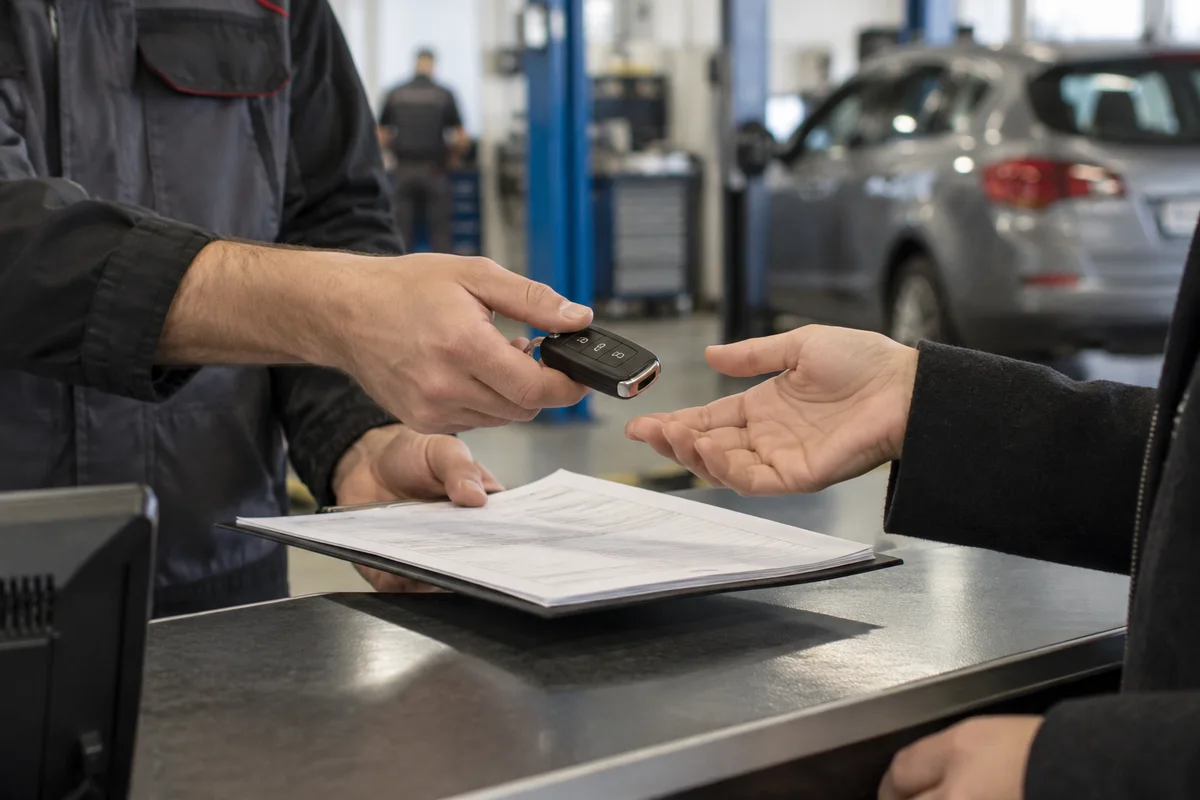
If something is clearly wrong, return to a safe position and contact the workshop promptly. Describe whether it is the same symptom or a different one, and preserve any new message. Keep the collection documents together so a follow-up does not depend on memory. A good handover leaves you knowing what was repaired, what evidence supports the result and what to do if the concern returns.
If the car was left overnight, check that any belongings moved for access have been returned securely. A loose item placed in a footwell should be removed before departure, even when the repair itself is complete.